

Trump Tells Federal Contractors to Check With the White House Before Handing Congress Government Secrets
A new executive order makes every company working for Washington loop in the White House on congressional requests about that work, and lets agencies cancel contracts for anyone who goes around it.
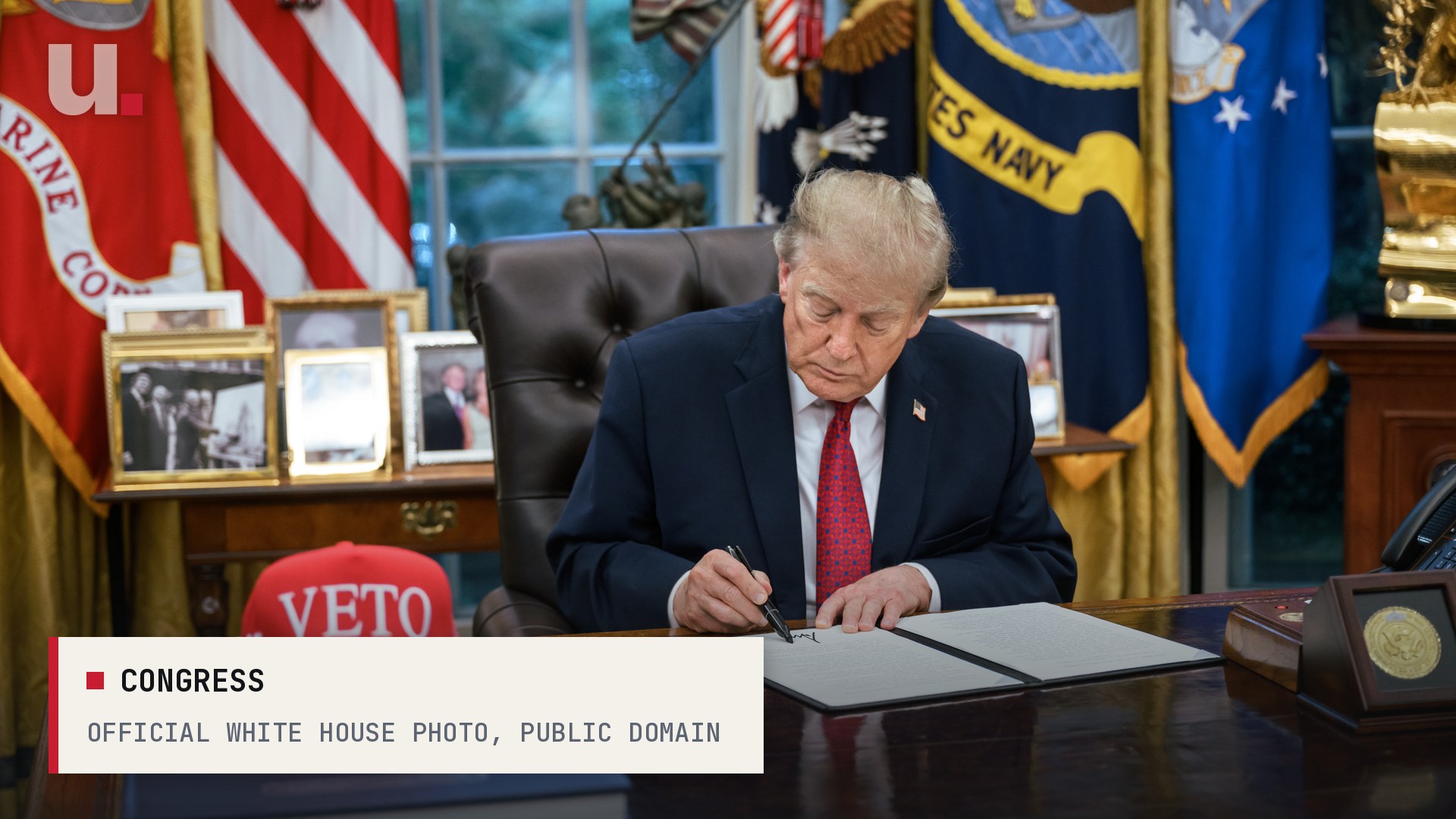
Companies that build, guard and run things for the federal government just got a new rule from the President. When Congress comes asking about their government work, they call the White House first. President Trump signed Executive Order 14438 on Friday, and it reaches every federal contractor and every subcontractor working under them.
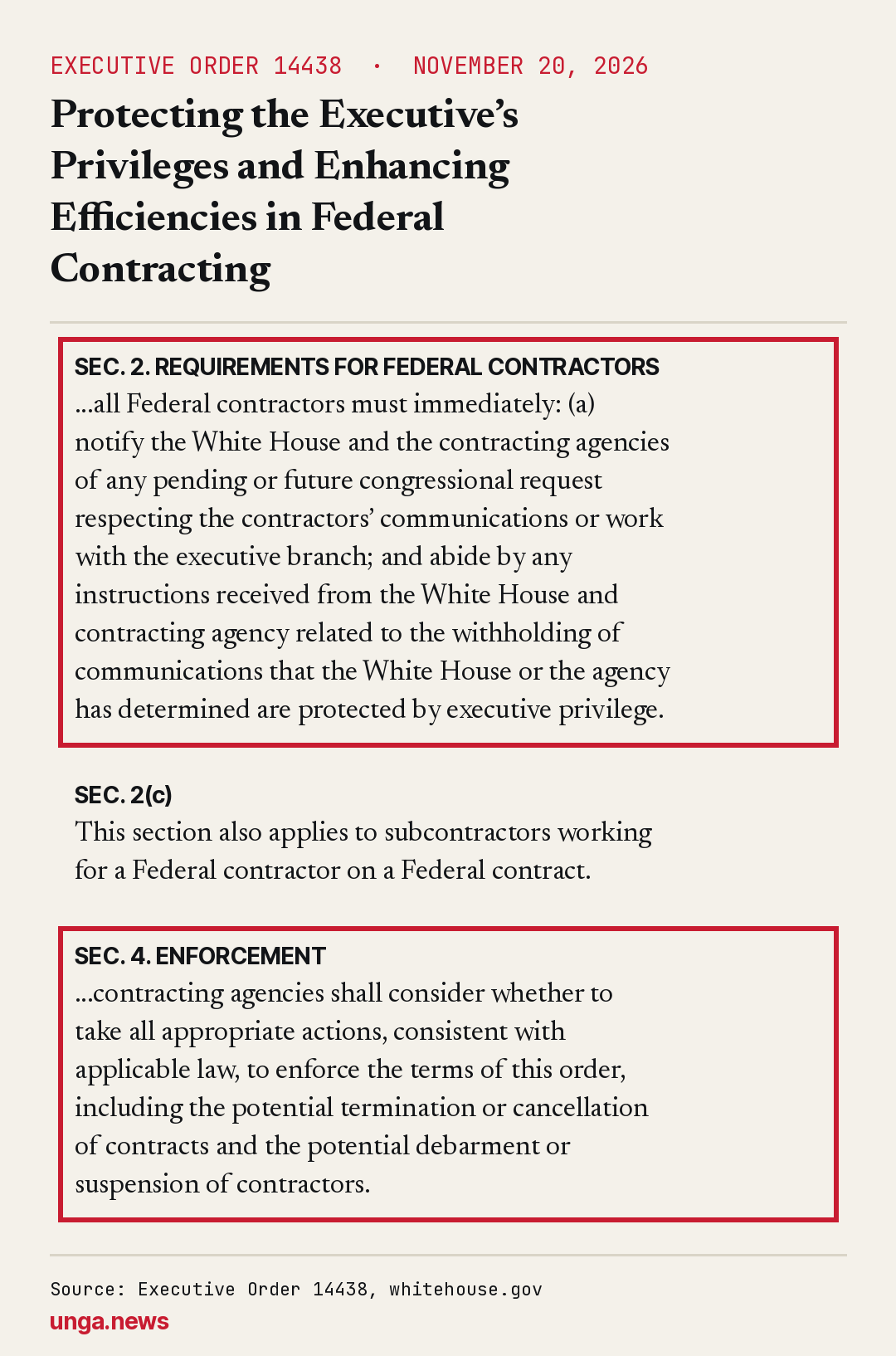
The order is short, about a page and a half, and the core of it fits in one sentence. Contractors “must immediately” notify the White House and the agency they work for of “any pending or future congressional request respecting the contractors’ communications or work with the executive branch,” then follow White House and agency instructions on withholding anything that has been “determined” to be covered by executive privilege.
A company is not a side entrance
The logic is simple once you see the problem the order is aimed at. A cabinet department can assert executive privilege when a committee demands its internal deliberations. A private company holding the very same emails, memos and planning documents, because it was hired to help carry out the work, has no such standing of its own. Without coordination, the company can hand over the records before the government even knows they were requested, and the privilege is gone the moment the papers leave the building.
The order says that is exactly the gap some lawmakers have been eyeing. “Certain congressional leaders have threatened to intrude on these Executive prerogatives by seeking confidential executive branch information from agencies and harassing private companies that contract with the Federal Government,” Section 1 reads. It adds that Congress cannot get privileged information, “including information shared between Federal employees and Federal contractors, before the executive branch has an opportunity to assert relevant privileges.”
There is a security piece too. The order points out that agencies share sensitive material with contractors on “matters of national and homeland security,” and warns that if officials can’t trust that those communications stay confidential, they will stop sharing them, which “will stymie the operation of critical Government programs.” Think of the firms that write software for border systems, run logistics for the military or handle data for law enforcement. Their files are full of the government’s business, not their own.
What contractors actually have to do
Section 2 sets three duties. Tell the White House and the contracting agency about any congressional request touching the government work. Let agencies and the White House coordinate the response, “including the application or assertion of any relevant privileges.” And make sure subcontractors follow the same rule, because the prime contractor is now responsible for them.
Section 3 orders every agency to “promptly inform all contractors and subcontractors” of the new obligations and directs the Office of Management and Budget to write guidance on how agencies check compliance and keep contractors, agencies and the White House in step.
Section 4 is the part with teeth. If a contractor or subcontractor ignores the order, agencies “shall consider” taking action “consistent with applicable law,” including “the potential termination or cancellation of contracts and the potential debarment or suspension of contractors.” Note the wording. Nothing is automatic, and every step runs through existing contracting law. But a company that does billions in federal work now knows what is on the table if it goes around the White House.
The White House also sold it as a money saver. When contractors and the government run “separate strategies and litigation regarding the same requests and information,” the order says, it “is inefficient and wastes taxpayer resources.” Two sets of lawyers fighting over the same documents is a bill the taxpayer pays twice.
Oversight letters are already flying
The timing is not hard to read. Democrats take control of the House and Senate committees when the new Congress convenes in January, and they have spent the past week telling everyone what they plan to investigate.
On Wednesday, Rep. Robert Garcia of California, the top Democrat on the House Oversight Committee and its incoming chairman, sent 12 document preservation letters to people including Donald Trump Jr., Eric Trump, Jared Kushner, Stephen Miller, Vice President JD Vance and Attorney General Todd Blanche. One letter, to former DHS adviser Corey Lewandowski, cites allegations about “steering lucrative government contracts toward allies.” Garcia’s own release promises, “This is just the beginning.”
The White House had already moved on the employee side. On Monday, White House Counsel Will Scharf told agencies to get sign-off from the counsel’s office and the Office of Legislative Affairs before any employee agrees to testify before a committee, according to the memo published by PBS News. A White House official told PBS the administration “will not be extorted, intimidated, or threatened into submission by politically motivated baseless investigations,” while adding, “We are ready to engage with Congress, this process ensures reasonable requests are respected.” Friday’s order closes the same loop for the private companies on the payroll.
Where the law already draws the line
None of this tells Congress it can’t investigate. The order itself says lawmakers can seek executive branch information when there is “a valid legislative purpose that does not intrude on core Executive functions,” language that tracks what the Supreme Court has said for decades. In Watkins v. United States in 1957, the justices wrote that there is “no congressional power to expose for the sake of exposure.” In Trump v. Mazars in 2020, they told Congress that demands for presidential information have to be tied to real legislative work and no broader than needed.
Critics will say the order is about blocking embarrassing questions, and some contractors may end up in court over a subpoena that the White House wants fought and a committee wants answered. That fight, if it comes, will be over specific documents and specific privileges, which is how these disputes are supposed to be settled. What the order takes off the table is the quiet version, where a nervous vendor hands over the government’s private files to a committee chairman and the executive branch reads about it later.
For the thousands of companies doing federal work, the instruction is now in writing and signed. Before anything goes to Capitol Hill, the first call goes to the White House.
Sources
- The White House — Executive Order 14438, Protecting the Executive’s Privileges and Enhancing Efficiencies in Federal Contracting (Nov. 20, 2026)
- The White House — Fact Sheet: President Donald J. Trump Protects the Executive’s Privileges and Enhances Efficiencies in Federal Contracting (Nov. 20, 2026)
- House Oversight Committee Democrats — Incoming Oversight Chairman Robert Garcia Launches Document Preservation Letters (Nov. 18, 2026)
- PBS News — Read the full White House memo requiring agencies to get approval before testifying in front of Congress (Nov. 16, 2026)
- CNBC — Trump orders federal contractors to notify White House before giving Congress information (Nov. 21, 2026)