

Trump Wants Big Tech’s Data Centers Built in America. Even Microsoft Says He Has a Point.
Trump warned that companies building SI data centers overseas will face a “tremendous tax.” Two days later, Microsoft’s president said on national TV that the president is “making an important point.”
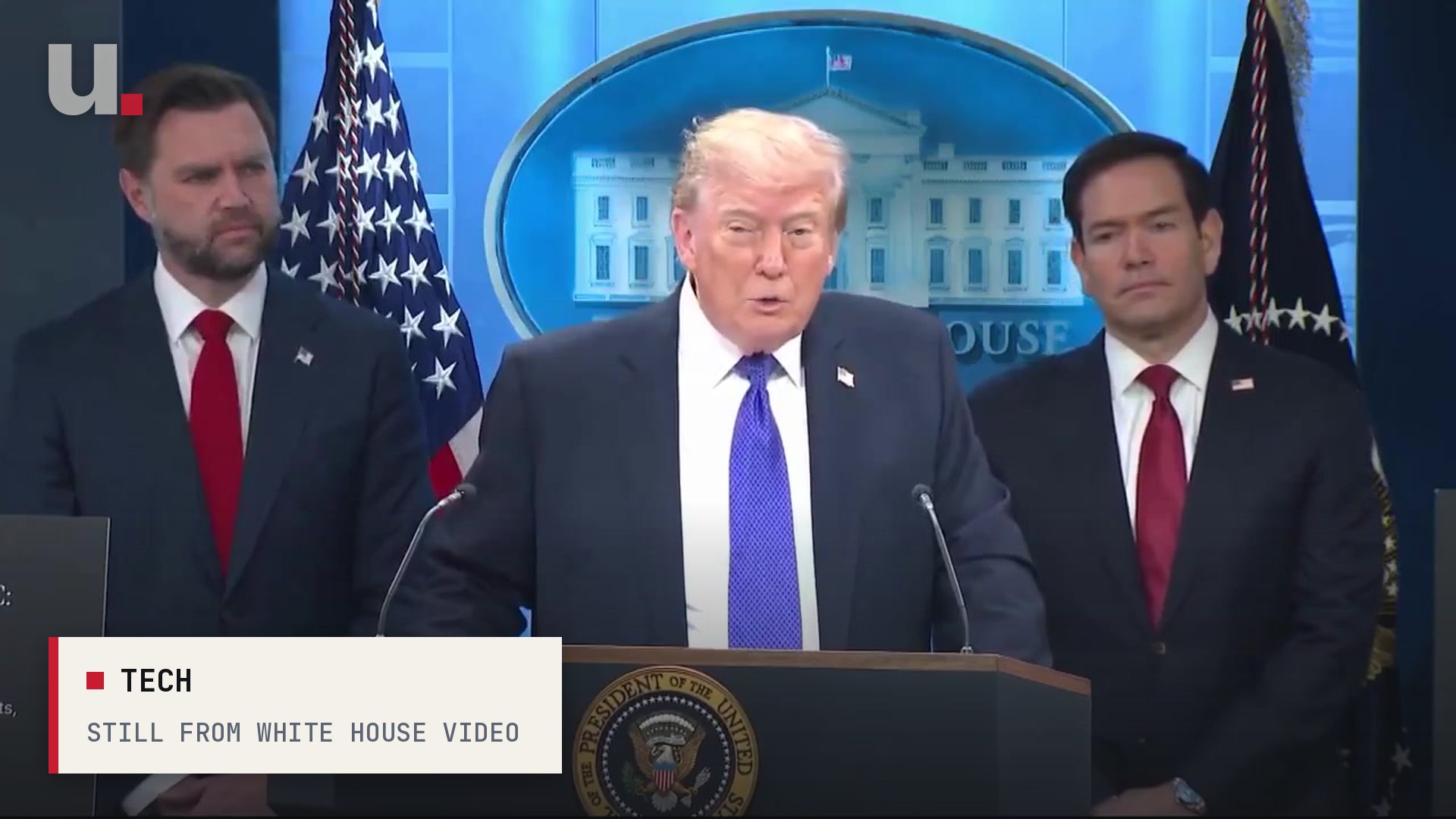
President Trump just told America’s biggest tech companies something they did not want to hear: if you’re going to build the giant computer warehouses that run SI, build them here. Build them somewhere else, and you’ll pay for it.
He said it Friday at a White House press conference, with Vice President JD Vance and Secretary of State Marco Rubio standing behind him. Companies that put data centers in other countries “can, but we’re going to put a tremendous tax on them,” Trump said. His reason was China. “We’re not allowing data centers to go into other countries because China will take all of them, and we’re not allowing that to happen. And we’re going to put tremendous penalties on companies that try and do it.”
White House Rapid Response on 𝕏: .@POTUS: “Whoever wins SI, wins... We’re not allowing data centers to go into other countries — because China will take all of them, and we’re not allowing that to happen.”
— @RapidResponse47 View on 𝕏
He was upfront that this was brand new. “I haven’t even said that to my people,” he said. “But I’m telling them now, they’re here.” Some coverage treated that like a gotcha. It’s really just how this president works. He says the goal out loud, then the staff writes the rules.
By Sunday morning, the most important answer came from the very industry he was talking to.
Microsoft’s president didn’t push back. He agreed.
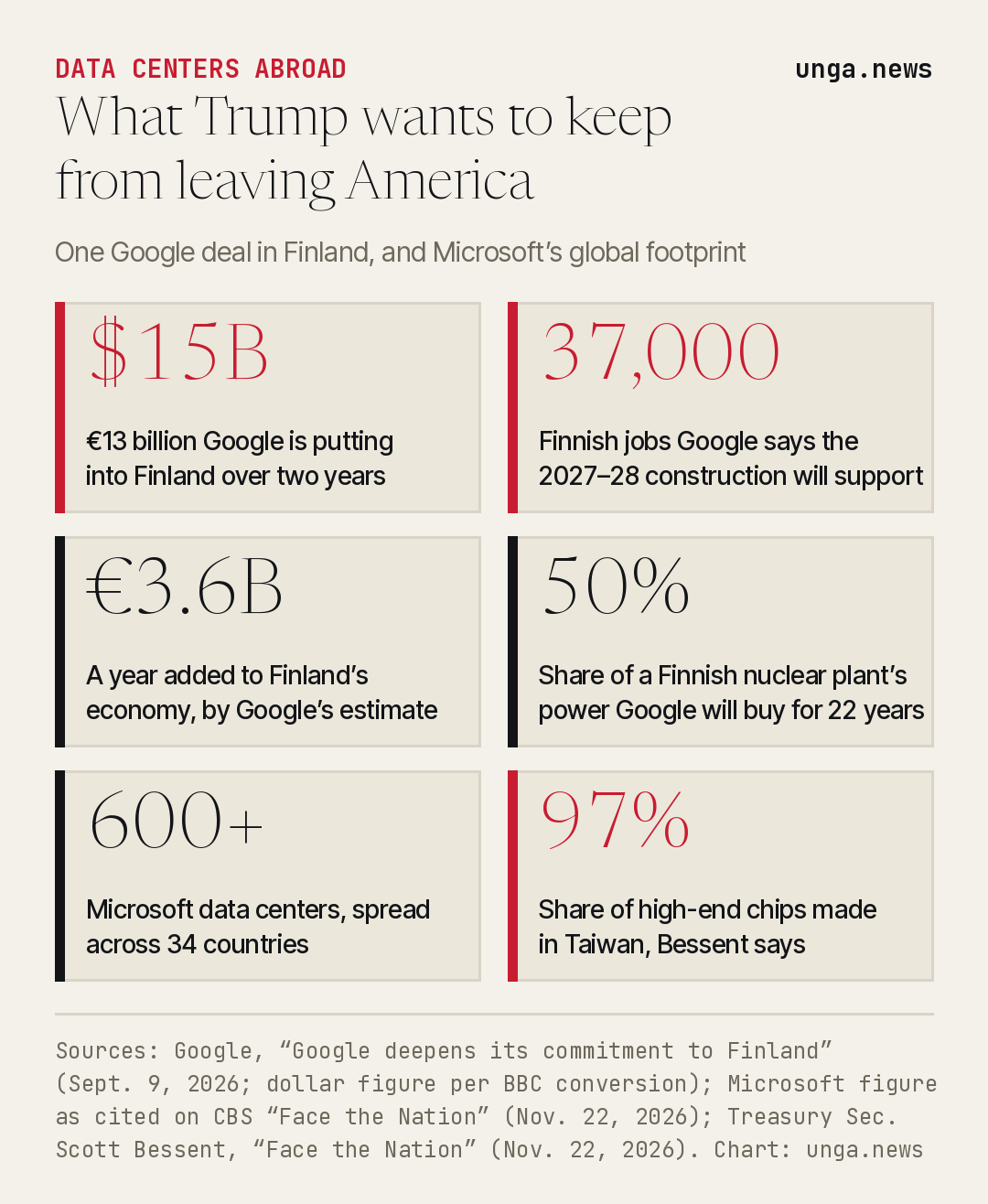
Microsoft has more than 600 data centers in 34 countries, so it has as much riding on this as anyone. Its president, Brad Smith, went on CBS’s “Face the Nation,” and instead of trashing the idea, he started by giving the president credit.
“My sense is that the president is making an important point,” Smith told host Margaret Brennan. He compared it to the push to bring chipmaking home. “I think the administration might want to see the most advanced frontier models trained in the United States, and there’s room to have that kind of conversation.”
That is a big concession, and it’s the heart of the whole thing. The most powerful SI systems are built, or “trained,” in a small number of enormous data centers packed with the best chips on Earth. Whoever owns those buildings owns the future of the technology. Smith just said on national TV that Washington has a fair case for keeping that work on American soil.
He did add a practical point. Most data centers, he said, don’t run the big SI training jobs at all. They stream your movies, run your video games and keep business software going, and they need to sit close to the people using them. “You can’t support Helsinki from New Jersey any more than you can keep the lights on in Helsinki from an electricity power plant in New Jersey,” he said.
Fair enough. Nobody in the White House is saying a bank in Finland should run its email through Ohio. The fight is over the big stuff, and on the big stuff, Microsoft just moved toward Trump.
Why Finland came up
Trump’s one example was a project in Finland. He didn’t name the company, and Brennan suggested on air that he might have meant a Chinese project. But the best-known plan there is Google’s. In September, the company announced a €13 billion package, about $15 billion, to build three new data centers, expand its existing site in Hamina and fund energy deals. Google called it its largest single investment in Europe.
Look at what Google says that money buys. More than 37,000 jobs supported during construction in 2027 and 2028. About €3.6 billion a year added to Finland’s economy. A 22-year contract to buy up to half the power from a Finnish nuclear plant. Those are exactly the jobs, power deals and tax dollars plenty of American towns would love to have.
The Finland plan has hit trouble on its own, too. The BBC reported that building work on two of the new sites was halted last month over concerns about clearing more than 300 hectares of forest.
The chip mistake Trump doesn’t want to repeat
Treasury Secretary Scott Bessent was on the same CBS program and said he hadn’t talked with the president about the plan yet. But he explained the thinking in one sentence. “I think the president’s very concerned that we don’t do a big technology transfer offshore,” he said.
Then he pointed to the warning sign. America used to lead the world in making computer chips. Now, Bessent said, “97 percent of the high-end chips are made in Taiwan, which creates a strategic vulnerability.” He said the administration is bringing that industry back, with big TSMC factories going up in Arizona, and hopes for “substantial onshoring of the chip business by the end of this administration.” As for data centers, “I think he’s worried about the same thing happening.”
That is the right worry. Washington spent decades shrugging while factories, steel and then chips moved overseas, and it took a pandemic and a hostile China to show what that cost. Trump is trying to stop the SI version of that story before it starts, while the buildings are still on the drawing board.
No rate, no date and no list yet
There’s no tax rate yet, no start date and no list of what counts as a covered data center. Smith’s line between giant training sites and everyday cloud sites is probably where any real rule ends up. It would also have to deal with companies that already run hundreds of sites abroad, and with allies who want American tech built on their soil.
There’s a hurdle at home, too. Plenty of Americans don’t want a giant data center going up near their house, and Democrats ran on that in the midterms. If the White House wants these buildings here, it will need power, permits and towns willing to host them. Trump’s answer Friday was that the country has “a lot of places that want them badly, and they’re great places. They have energy, and they have everything.”
The chip fight showed how this tends to go. First the president sets the goal, then the companies grumble, and then they start building in Arizona. On Sunday, Microsoft’s president skipped the grumbling and went straight to “the president is making an important point.” Big Tech heard the message.
Sources
- White House Rapid Response on 𝕏 — Trump on keeping data centers in America (Nov. 20, 2026)
- CBS News — Transcript: Brad Smith, Microsoft president and vice chair, on “Face the Nation with Margaret Brennan,” Nov. 22, 2026
- CBS News — Full transcript of “Face the Nation with Margaret Brennan,” Nov. 22, 2026 (Scott Bessent)
- Google — Google deepens its commitment to Finland with a €13 billion investment in AI infrastructure (Sept. 9, 2026)
- CNBC — Trump vows to stop U.S. companies from building data centers abroad (Nov. 20, 2026)
- BBC News — Trump threatens ban on US firms building AI data centres overseas (Nov. 2026)
- GeekWire — Microsoft’s Brad Smith on Trump’s data center tax threat (Nov. 23, 2026)