

Trump Wraps Up Trade Talks With Thailand, Which Agreed to Drop Tariffs on 99% of US Goods
Thailand says the main terms are settled, and the two leaders were set to sign a joint statement in Manila on the sidelines of the ASEAN summit.
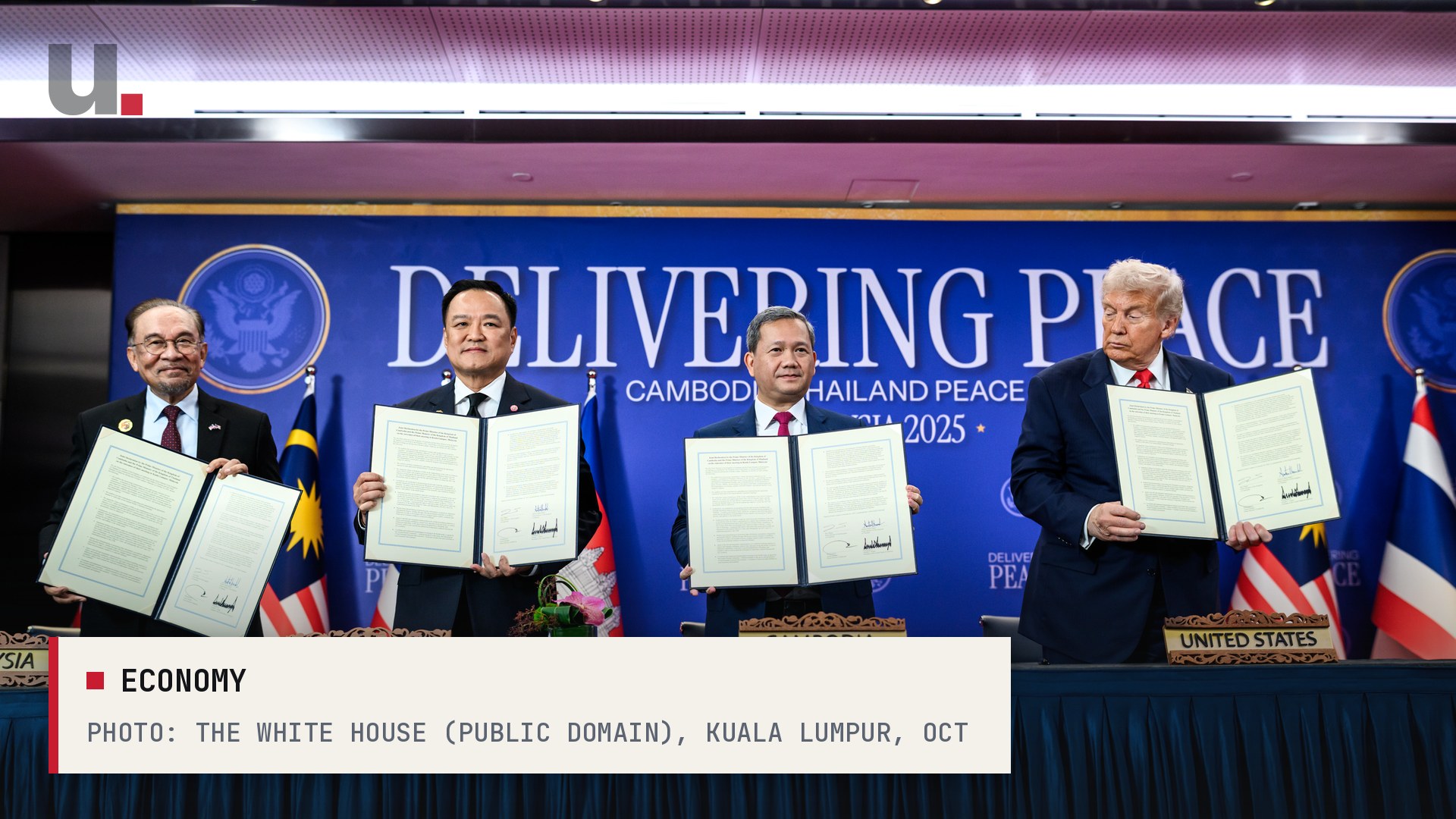
Thailand says its trade talks with President Trump are done. Prime Minister Anutin Charnvirakul and Trump were set to sign a joint statement Tuesday evening in Manila, on the sidelines of the ASEAN summit, declaring that the two countries have agreed on the main terms of a new trade deal after months of back-and-forth.
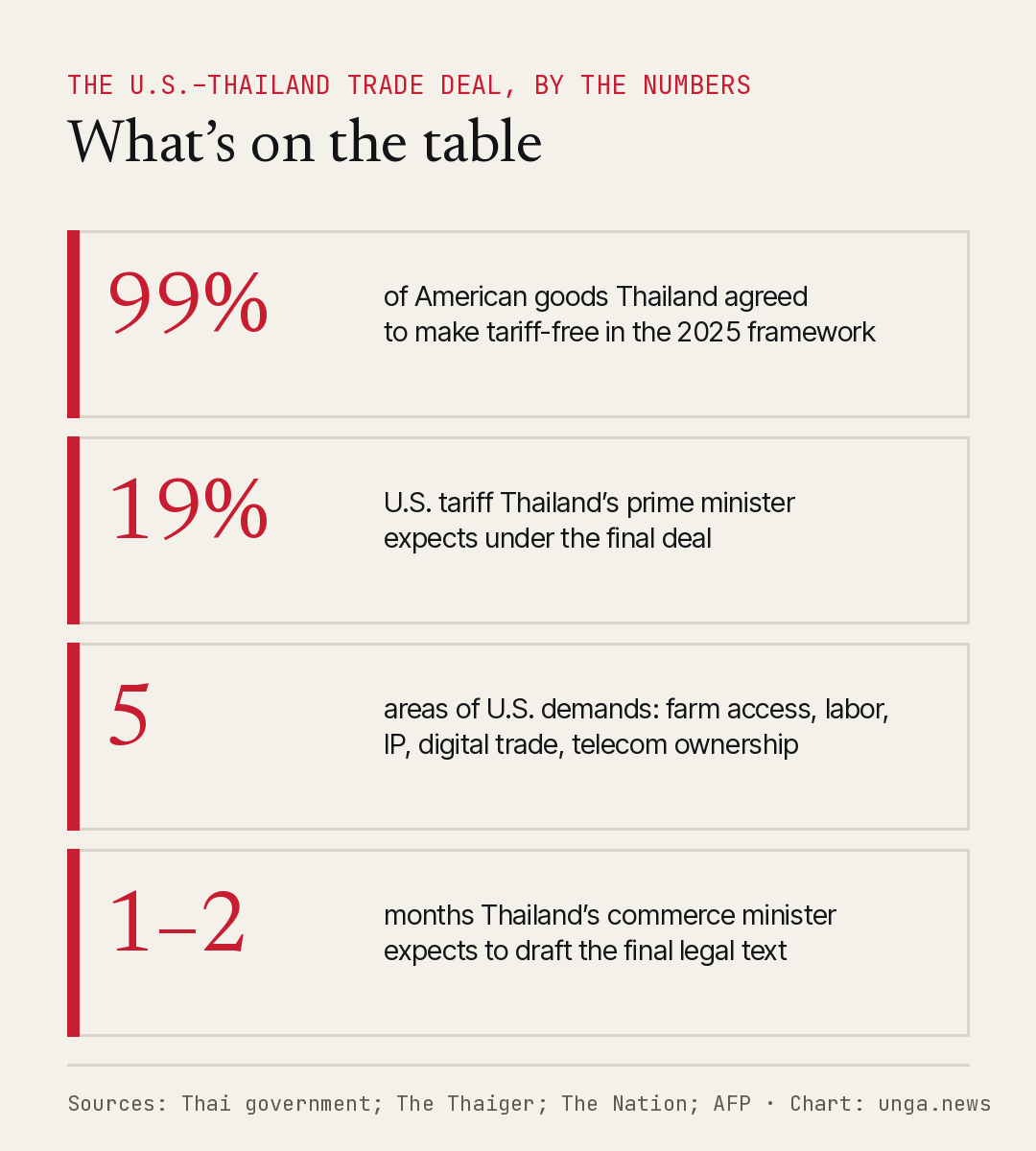
It is the next step after the framework the two leaders announced in October last year, when Thailand agreed to remove tariffs on about 99% of goods coming in from the United States. That promise is the part American exporters care about most, and Tuesday’s statement tells them the deal is still on track.
Thai officials were careful to say what the paper is and what it isn’t. Deputy government spokeswoman Lalida Persvivatana told AFP it marks “significant progress” toward what both sides call an Agreement on Reciprocal Trade. “However, the signing is not yet the formal ART agreement,” she said, because Thailand still has to hold a public consultation and run the deal through its own legal steps.
Bangkok says the hard part is over
Foreign Minister Sihasak Phuangketkeow went further over the weekend. He said the statement would confirm that both countries had reached agreement on the broad terms and that “everything would move forward,” according to The Thaiger.
He also brushed aside worries that Trump would use the Manila trip to squeeze Thailand harder. The talks had reached a point both sides found satisfactory, he said, and the president had plenty of other business at the summit.
Sihasak was blunt about why Bangkok came to the table. The United States is a very large market, Thailand runs a big trade surplus with it, and keeping access to that market at the lowest tariff possible was the whole goal of the long negotiation. In his telling, that goal has now been reached.
Most of the bargaining, he said, was about market access: Thailand buying more American goods, Thai companies investing in the United States, and Thailand opening up service industries that have been closed to outsiders.
Anutin said on November 5 that he expects a U.S. tariff of around 19% on Thai goods under the final agreement, and that existing tariff arrangements stay in place until that agreement is signed. Thailand’s Cabinet signed off on the draft joint statement on November 10.
What Washington asked for
Thailand’s English-language daily The Nation laid out the five areas where the U.S. side has pressed for changes: wider access for American farm products, stronger labor protections, tougher enforcement of copyrights and patents, new digital trade rules that rule out digital taxes, and lifting the 49% cap on foreign ownership of Thai telecom companies.
The farm list is long. Washington wants Thailand to cut red tape on import permits and to speed approvals for American meat and poultry certified by the U.S. Food Safety and Inspection Service. The requests cover pork, beef, poultry and offal, along with Thai restrictions tied to ractopamine, a feed additive used by many American livestock producers.
The U.S. side also wants Thailand to review its rules on other farm products, including distillers dried grains, a by-product of ethanol production that American farmers sell as animal feed, and to base those rules on scientific risk assessments.
Commerce Minister Suphajee Suthumpun, who also serves as a deputy prime minister, has said Thailand will hold its ground on food-safety standards, national security and certain investment rules. Those red lines are a big reason the final text is still being drafted.
Still to come
The joint statement does not spell out the full terms or name a tariff rate. Both governments now have to finish their own procedures before the full agreement is signed and takes effect. In Thailand that means legal teams settling the wording, another Cabinet vote, parliamentary consideration and public consultation.
Suphajee has said the legal drafting should take one to two months. Until then, Thai goods entering the U.S. keep paying the current rate, which The Thaiger puts at 12.5% since July 24, with about 2,120 Thai product lines exempt.
The signing caps a busy ASEAN week for the president. Thailand is one of the larger economies in Southeast Asia, and a deal that ends tariffs on nearly all American goods would make it one of the more open markets in the region for U.S. farmers and manufacturers.
The two leaders have history. Anutin stood beside Trump in Kuala Lumpur in October 2025, when Thailand and Cambodia signed the peace accord Trump helped broker, the same trip that produced the trade framework now being finished.
After the signing, the two leaders were scheduled to attend a special ASEAN–U.S. summit and a dinner in Trump’s honor, according to Thai government spokesman Ekkapop Pianpises. Thailand says the full agreement comes next.
Sources
- AFP via France 24 — Trump, Thai PM to make joint trade statement in Manila
- The Thaiger — US tariff deal done, Thailand says, Manila signing due
- The Nation — Thailand weighs five US demands tied to 19% tariff ahead of Nov 17 statement
- Khaosod English — Anutin, Trump to sign joint statement on Thai-US reciprocal trade
- Thaiger News — Anutin and Trump to Sign US Trade Statement in Manila