

Trump’s Border Asylum Ban Is Still Standing. The Supreme Court Takes a Second Look Friday.
Lower courts struck down Trump’s Day One order shutting asylum for illegal crossers, but it’s still in force. The administration says crossings fell 93% and wants the justices to save it.
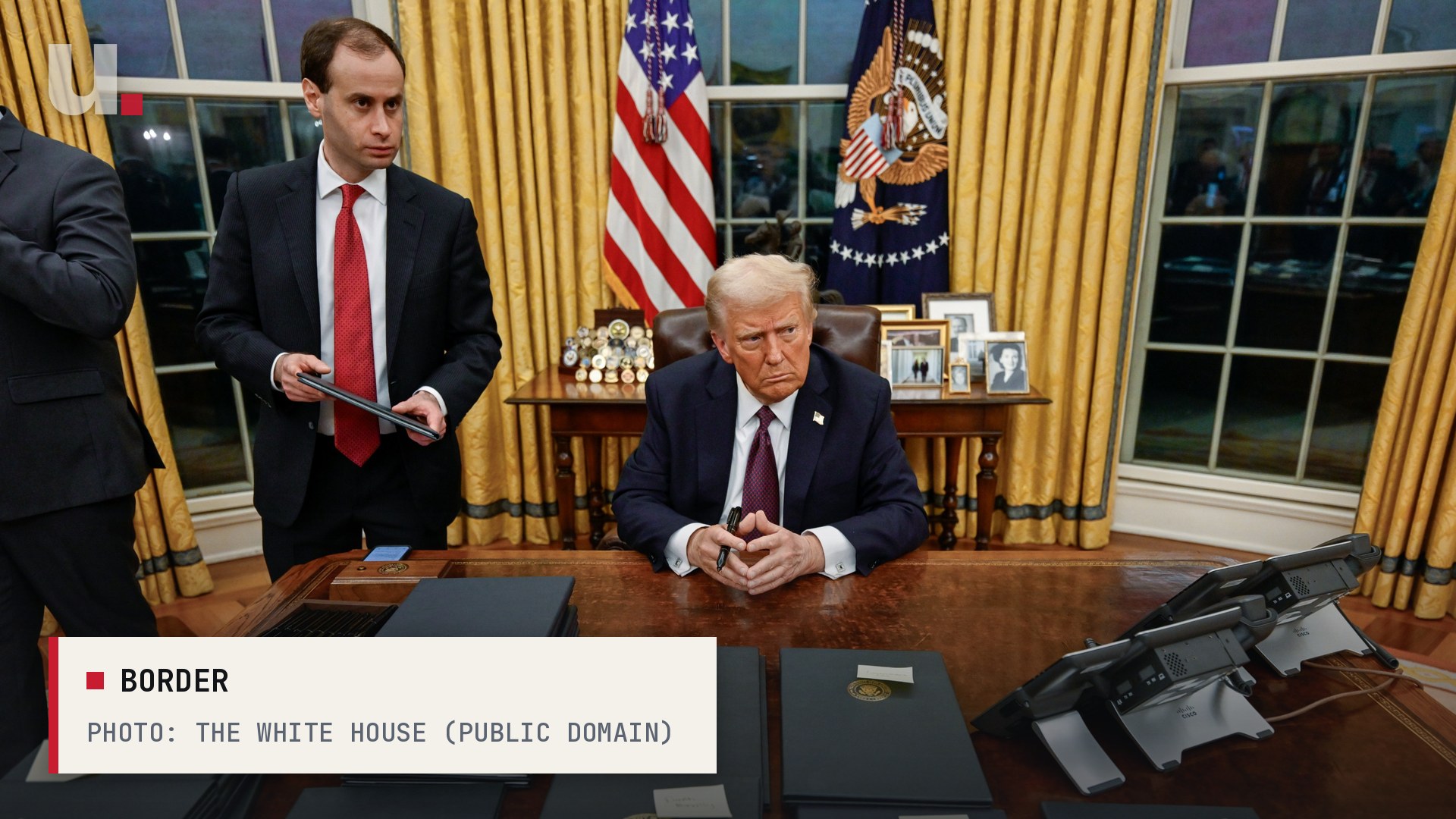
On his first day back in the White House, President Trump signed an order that shut the asylum door for people who sneak across the southern border. Nearly two years and a pile of court losses later, that order is still in force, and on Friday the nine justices of the Supreme Court sit down for a second time to decide whether they’ll take the case.
The case is called Mullin v. Refugee and Immigrant Center for Education and Legal Services, after Homeland Security Secretary Markwayne Mullin and the Texas nonprofit that sued. The justices already discussed it at their Nov. 6 private conference and put it back on the list for this Friday instead of ruling it in or out. That move is called a relist, and SCOTUSblog’s John Elwood, who tracks every one, calls this “the most consequential new relist this week.” It takes four of the nine to agree to hear a case.
For anyone who cares about the border, the stakes are simple. If the justices turn the case away, a lower-court ruling that says Trump had no power to do this takes effect, and the asylum shutoff goes with it. If they take it, the order stays put while they decide, and the country gets a final answer on how far a president can go to stop illegal crossings.
One proclamation, signed Jan. 20
The order is Proclamation 10888, titled “Guaranteeing the States Protection Against Invasion.” It suspended entry for anyone “engaged in the invasion across the southern border” and told immigration officers that people who cross illegally can’t use the parts of immigration law that would let them stay while their cases drag on, asylum included.
Three advocacy groups and 13 migrants sued. A federal district judge in Washington ruled the restrictions illegal and certified a class covering everyone subject to the order, including people who haven’t even arrived yet. On April 24, 2026, a three-judge appeals panel in Washington, Judges Pillard, Walker and Childs, mostly agreed. In July the full court refused to rehear it. Not one judge voted to.
But the same court froze its own ruling so the administration could come to the Supreme Court first. That stay is the only reason the asylum limits are still running at the border today.
The 93 percent argument
Solicitor General D. John Sauer filed the government’s petition on Aug. 24. His case rests on two ideas. First, asylum has always been a favor the government may grant, not a right anyone is owed, and the Supreme Court said as much in a 2020 case. Second, if the president has already decided every illegal crosser’s asylum request will be denied, making officers sit through each one anyway is a waste of everyone’s time. “Process is not an end in itself,” the brief says, quoting a 1983 Supreme Court opinion.
Then comes the number the administration wants the justices to remember.
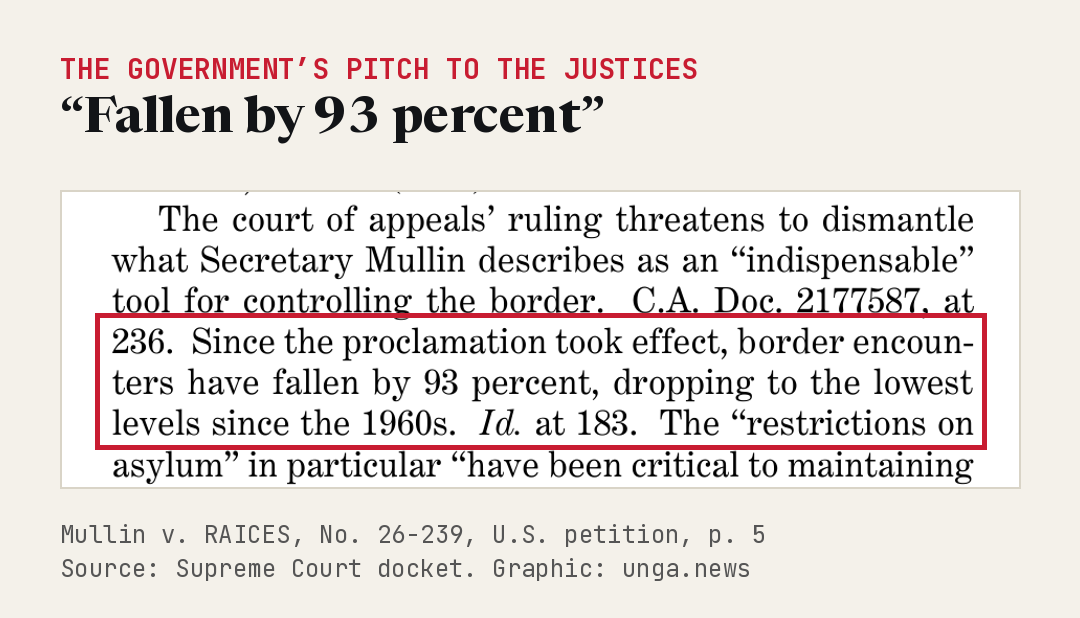
The brief says the asylum limits in particular “have been critical to maintaining the effectiveness of the Proclamation” and quotes Mullin calling the order an “indispensable” tool. It reminds the justices what came before: millions crossing because a claim meant release for years, eight Tajik nationals suspected of ISIS ties getting into the country in 2023 and 2024, some of them filing asylum claims, and cartels using the chaos to move drugs and guns. Let the ruling stand, Sauer warns, and it “threatens to revive the chaos along the southwest border.”
Iowa and 21 other states filed in support, arguing the lower court undercuts Washington’s duty to protect the states against invasion. America First Legal and the Federation for American Immigration Reform filed briefs on the same side.
“Invent by fiat”
The groups that sued don’t think the justices need to bother. Their brief in opposition says the appeals court simply read the law as written. Federal law says anyone who is “physically present” in the United States “may apply” for asylum, whether or not they came through a legal crossing. In their words, the president “may not invent by fiat a new removal system that eviscerates the protections Congress mandated by statute.”
They also come after the 93 percent. Border apprehensions, they argue, had already dropped more than 90 percent from their late-2023 peak by the time Trump took office, and they say the government picked “cherry-picked periods” to make the order look better. They point out that crossings by unaccompanied children, who aren’t covered by the order, fell at about the same rate afterward. And they note that the first Trump administration told the Supreme Court in 2018 that the law plainly lets people apply for asylum no matter how they got here.
I’ll say the obvious. The numbers before January 2025 fell because the last administration finally tightened up in an election year, and the numbers after fell to levels not seen since the 1960s. Arguing about which policy gets credit for which slice of the drop is a fine debate for a seminar. Border towns care that it stayed down.
The judge who saw it Trump’s way
The most useful voice for the administration may be Judge Walker, a Trump appointee who dissented in part. He agreed the government can’t send anyone to a country where they’d be persecuted and can’t skip the protections against that. But on asylum itself he sided with the president: “The Executive has already exercised his lawful discretion to deny all asylum applications. So he may foreclose the application process as futile.”
Walker also wrote that the district court “wrongly issued relief to potentially millions of plaintiffs without standing,” and that federal law bars lower courts from issuing this kind of classwide order on these immigration procedures at all. Those are two of the three questions Sauer is asking the justices to answer.
Why there’s no sure thing here
The usual reason the Supreme Court takes a case is that appeals courts across the country disagree. There’s no split here, and the challengers lean on that. On the other hand, Elwood calls the government “the court’s most successful repeat litigant” and says striking down a major administration policy “could well persuade the justices to take another trip to the border.” Sauer’s brief reminds them they did exactly that with Trump’s travel ban in 2018.
The case is No. 26-239 on the court’s docket. The justices meet Friday. If they grant review, the order could come as soon as Monday, and a decision would likely land by next summer. If they relist it again, the asylum shutoff keeps running in the meantime, which is exactly what the administration wants.
Sources
- U.S. Solicitor General — Petition for a writ of certiorari, Mullin v. RAICES, No. 26-239
- RAICES et al. — Brief in opposition, Sept. 23, 2026
- Supreme Court of the United States — Docket No. 26-239
- The White House — Proclamation 10888, Guaranteeing the States Protection Against Invasion
- SCOTUSblog — Eleven new relists in search of four votes