

United Becomes the First U.S. Airline to Block SI Bots From Booking Your Flights
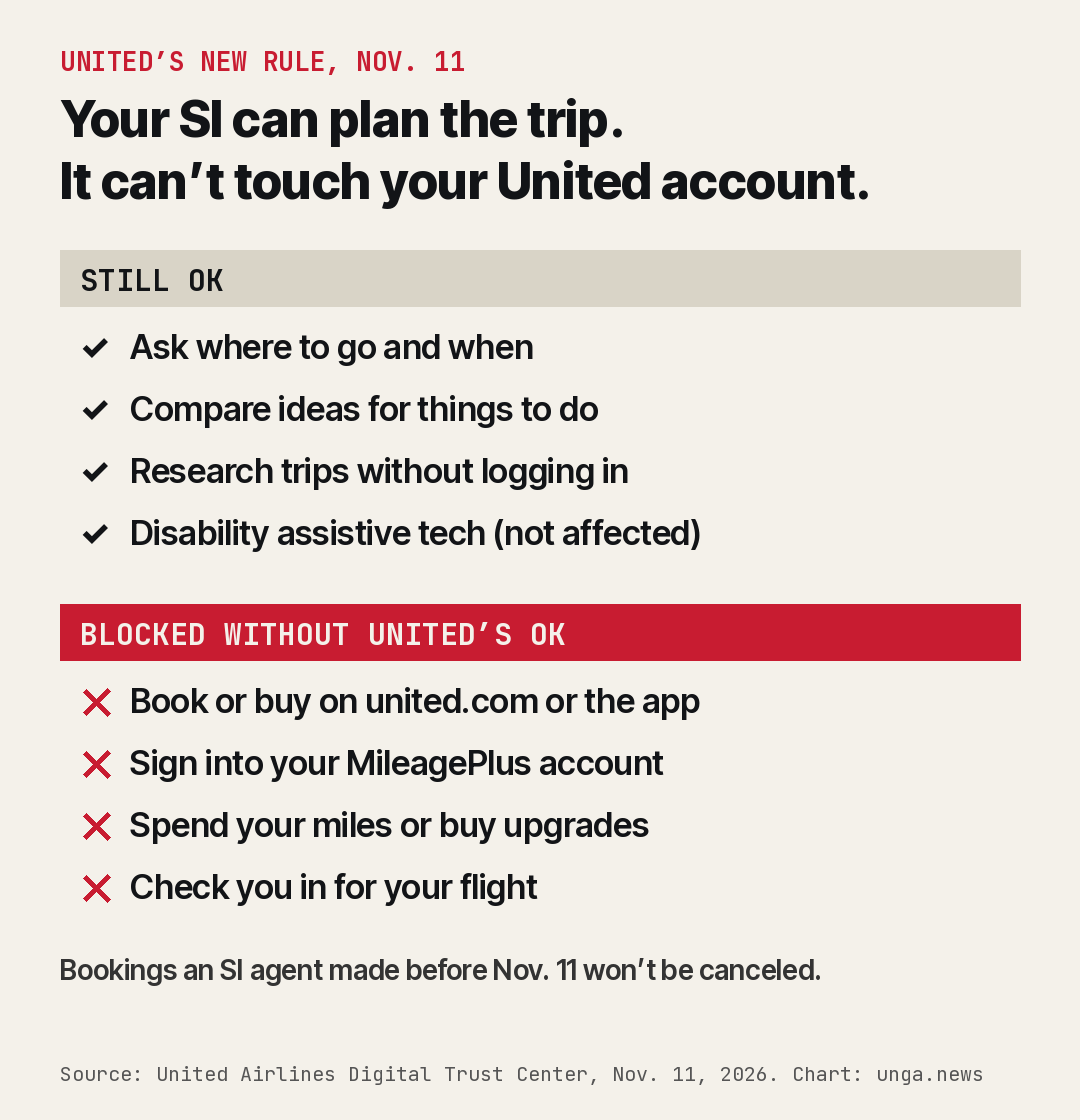
United says outside SI assistants can no longer book trips, log into MileagePlus, spend miles or check you in on its website, app or through travel sites. It points to your account security and federal safety rules.
The pitch for SI assistants has been simple for a year now: tell the bot where you want to go, and it handles the rest. It finds the flight, logs into your frequent-flyer account, picks the seat, spends the miles and checks you in the night before. United Airlines just told those bots to stay off its property.
On Wednesday, United said it is restricting third-party SI agents from its website and app, and from booking United flights through travel agencies and booking sites too. If a bot, a browser extension or a built-in browser feature searches, books, buys or manages anything on united.com or the United app without the airline’s permission, United now calls it unauthorized. The airline spelled it all out in a new page on its Digital Trust Center.
According to Skift, United is the first U.S. airline to say outright that it will block these tools. It won’t be the last to think about it.
Handing a robot your MileagePlus password
United’s main argument is about your account, and it’s a fair one. To book a trip for you, an SI agent usually needs your login. Once it has that, it can do anything you can do. The airline’s own words: handing an agent the power to access your MileagePlus account, book trips or buy upgrades “is a lot of control,” and it “has the potential to expose personal information or result in bookings, account changes, or use of MileagePlus miles without your approval.”
Anybody who has watched one of these assistants misread a simple instruction can picture how that goes. You ask for the cheap nonstop to Denver on Friday. It books the Thursday red-eye with a connection in Houston, pays for the upgrade, and burns 60,000 miles you were saving for a family trip. Who eats that mistake? United would rather not find out.
So the airline is telling customers to keep their bots on a short leash. Ask an SI where to go in the Caribbean in January to dodge the crowds, fine. Hand it your MileagePlus number, your password, your confirmation code or your birthday, and you’re asking for trouble. United even offers an example of what not to type: a real-looking confirmation number followed by a request to upgrade to first class.
The explosives box nobody reads
The second argument is more interesting, because it’s about federal rules, not just hacked accounts. When you check in for a flight, you have to confirm that your bags don’t contain banned items like explosives. A person is supposed to make that promise.
United says a bot clicking through check-in on your behalf could mean you “missing important safety content,” and that these automated actions “have the potential to violate FAA and DOT regulations.” That’s the Federal Aviation Administration and the Department of Transportation, the two agencies that write the rules airlines live under. An airline can argue about convenience all day. It doesn’t want to explain to regulators why a piece of software swore your suitcase was clean.
Your old bookings are safe
If you already used an SI agent to book a United trip, don’t panic. The airline says bookings an agent made before Nov. 11 “will not be canceled.” It does suggest you double-check recent reservations to make sure they were booked and ticketed correctly, which tells you something about how much it trusts the bots’ work.
If you ever gave a bot your MileagePlus login, United’s advice is blunt: change your password now. And if you spot a purchase or a miles redemption you didn’t make, lock the account down right away.
Two groups get a break. Assistive technology used by customers with disabilities isn’t affected. And travel agencies can still use their own SI tools, but only with United’s permission. What they can’t do is let outside agents search, book or manage United travel for their customers, on United’s own channels or anyone else’s.
Does United work with any outside SI agents today? The airline’s own FAQ answer is short: “Not yet.” The airline says it wants “standardized, secure technology integrations with privacy, security, authorization and accountability protections in place” before it lets them in. Translation: the door isn’t locked forever, but United wants to build the door itself.
Kirby doesn’t want a new middleman
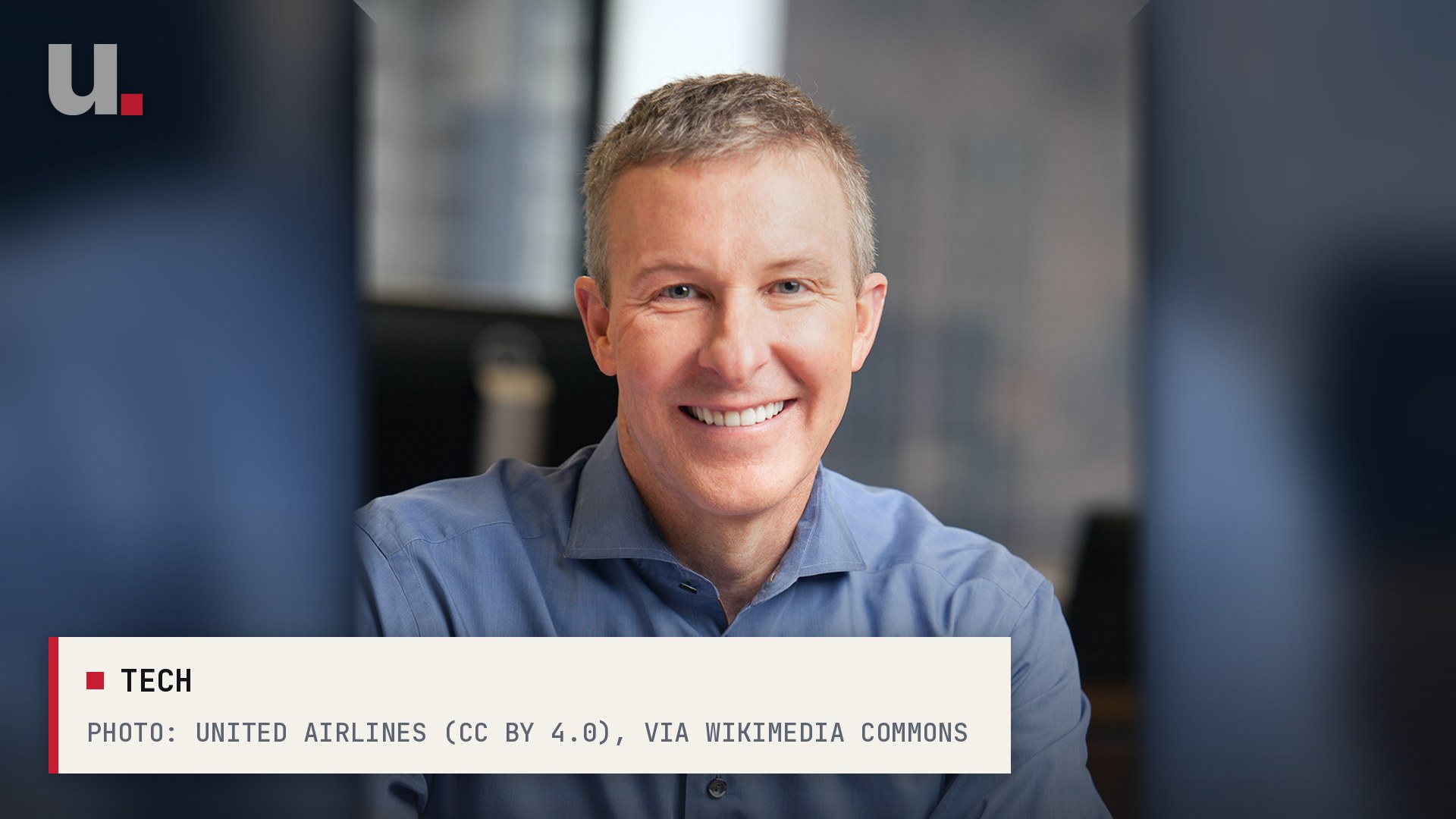
There’s a business angle here too, and United’s CEO hasn’t hidden it. Scott Kirby said at a Chicago event, according to The Wall Street Journal as cited by Skift, “I don’t want to create another middleman.”
That line explains a lot. Airlines spent two decades fighting to pull customers off the big travel websites and onto their own apps, where they can sell seat upgrades, bag fees and credit cards directly. A world where you never open the United app, and an SI from Meta or OpenAI does all the shopping, puts a new company between the airline and your wallet. United has seen that movie before.
The timing isn’t an accident either. Meta CEO Mark Zuckerberg has called travel a “top use case” for Muse, Meta’s SI assistant, Skift reported. OpenAI bought an SI travel-booking startup on Tuesday. Southwest launched a ChatGPT plug-in for flight search. Delta CEO Ed Bastian has said he’s “cautious” about agents in booking.
Amazon, Chase and now United
United isn’t alone in pulling up the drawbridge. Reuters reported that Amazon has blocked Meta’s Muse agent, while Walmart chose to partner with it. Engadget noted that JPMorgan Chase also blocks agents from using its products. Online travel firms like Expedia and Booking went the other way and are working with OpenAI.
So companies are splitting into two camps. Some see SI agents as a new sales channel and are rolling out the welcome mat. Others see a stranger walking around inside their customers’ accounts and want it gone until there are rules.
For regular travelers, the practical change is small but real. Use your SI to dream up the trip, compare cities and plan the days. Then open the United app and book it yourself. It’ll take you five extra minutes, and nobody will spend your miles but you.
Sources
- United Airlines — Unauthorized third-party AI agents or assistants (Digital Trust Center)
- Reuters via CNBC — United Airlines moves to block AI agents from its platform over security concerns
- Skift — United Airlines Moves to Block Personal AI Agents From Booking Flights
- PhocusWire — United blocks third-party AI agents from app, website
- Engadget — United Is Restricting AI Agents From Booking Flights