

Washington Owns Huge Chunks of the West. Interior Plans to Sell Some to States and Towns.
The Interior Department’s new five-year plan says it will offer federal land to states, localities and tribes, steer conservation money toward access on private land, and stop the federal estate from growing.
If you live in the rural West, you already know the feeling. The county line runs right up against land your town can’t build on, can’t tax and can’t manage, because somebody in Washington owns it. The Interior Department just put in writing that it wants to change some of that.
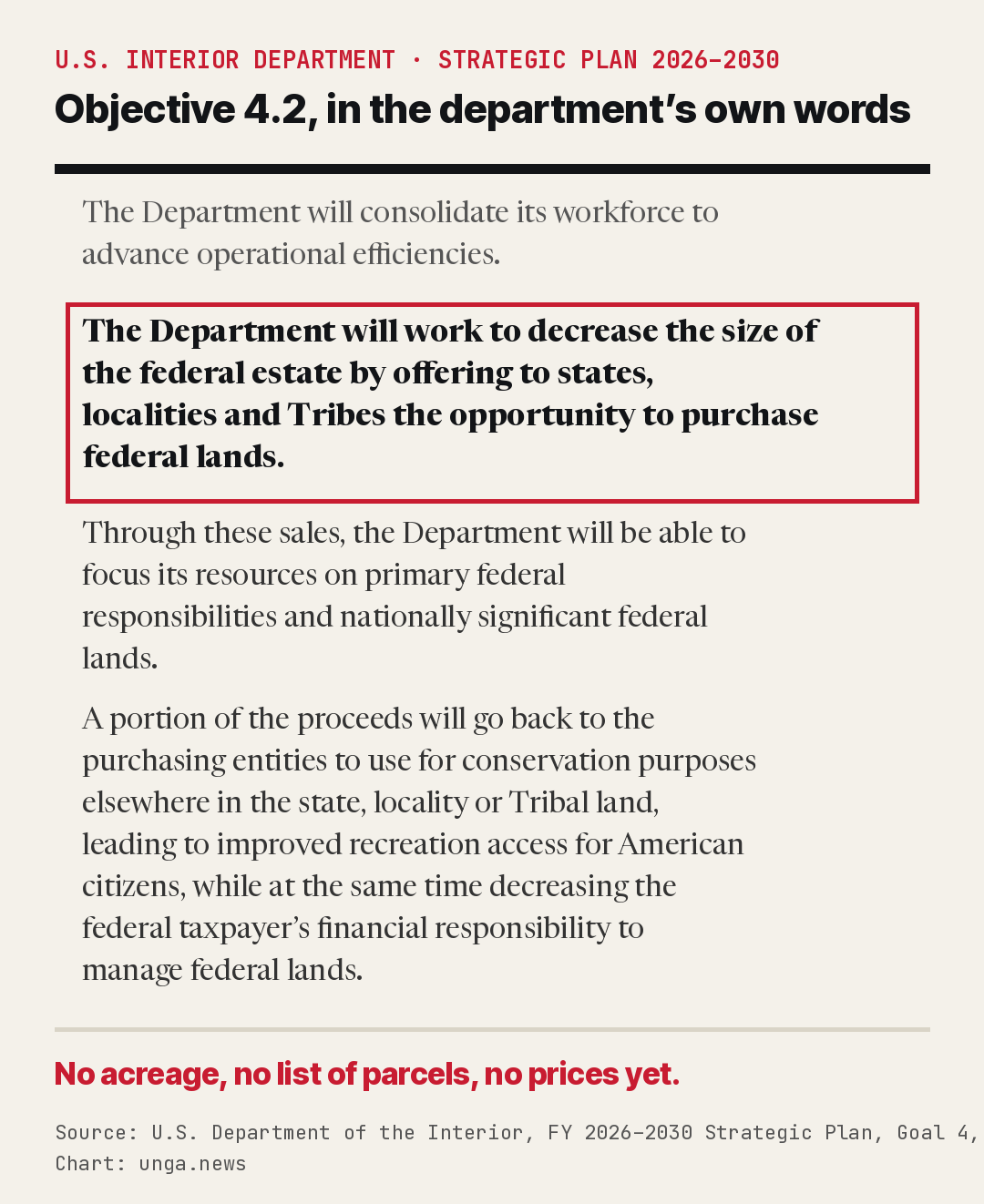
In its new five-year strategic plan, covering 2026 through 2030, the department under Secretary Doug Burgum says it “will work to decrease the size of the federal estate by offering to states, localities and Tribes the opportunity to purchase federal lands.”
That sentence sits on page 15 of a 28-page document dated Nov. 10. It is the clearest statement yet from this administration that federal land sales are official policy, and it surfaced Wednesday as reporters and Western groups worked through the plan.
Sell it to the people who live next to it
The pitch is simple. The plan says the sales would let Interior “focus its resources on primary federal responsibilities and nationally significant federal lands.” Then comes the part aimed at taxpayers: “A portion of the proceeds will go back to the purchasing entities to use for conservation purposes elsewhere in the state, locality or Tribal land, leading to improved recreation access for American citizens, while at the same time decreasing the federal taxpayer’s financial responsibility to manage federal lands.”
Read that again. The buyer is not a hedge fund. It is a state, a county, a city or a tribe. And some of the money comes back to that same buyer for parks, trails and access somewhere else.
The same section of the plan lays out the philosophy behind it. “The best stewards of our public lands are leaders of state and local communities whose lives and livelihoods are tied to its management,” it says. It talks about partnerships to speed up broadband, utilities and “building affordable housing, especially in rural, Insular and Tribal areas.”
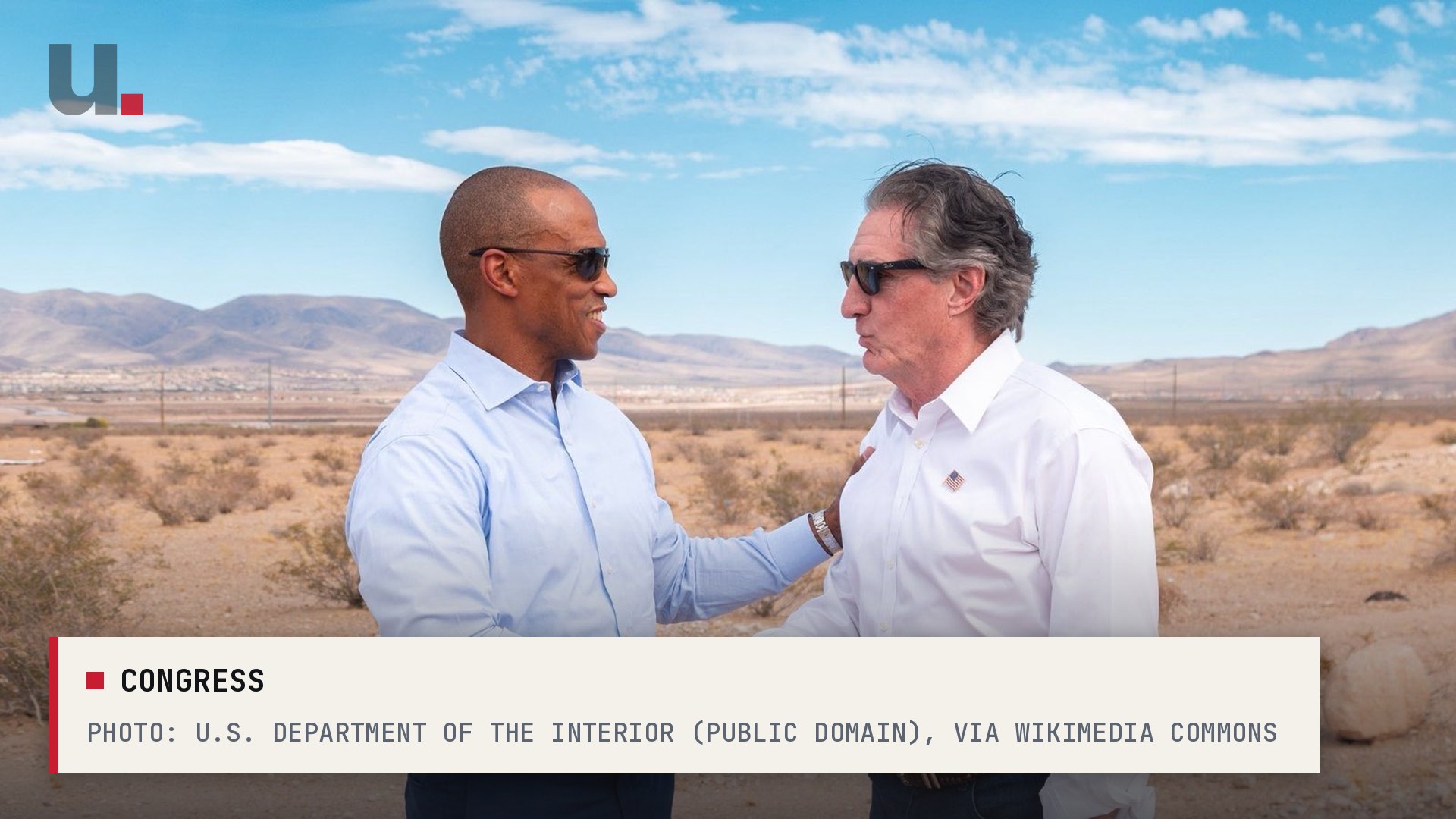
Burgum knows the ground. Last year he and Housing Secretary Scott Turner visited Nevada together, a state where Washington owns most of the land and fast-growing cities press right up against federal acreage.
The money that used to buy more land
The plan doesn’t stop at selling. It also changes what Interior does with the Land and Water Conservation Fund, the program Congress pays into every year. The Washington Sun reported that fund gets $900 million annually, part of which has traditionally gone to buying even more federal land.
Interior now says it will shift that money toward “conservation and recreation access easements on privately owned lands.” In the plan’s words, the goal is to “ensure that the federal estate does not continue to grow while at the same time increasing recreation access for the American public.”
So instead of Washington buying up another ranch, the money pays a rancher to let hunters and hikers through. The land stays private, stays on the tax rolls, and the public still gets in.
The plan also calls for “strategic rights-of-way agreements, land exchanges and direct transfer of lands in support of reliable energy production and transport,” which it says will lower oil, gas and electricity costs. It mentions growing demand from “Super Intelligence data centers” as one reason the country needs more power and minerals from public ground.
In his letter opening the plan, Burgum said Interior stewards more than 500 million acres of land and quoted Theodore Roosevelt: “Conservation means development as much as it does protection.” His own line after that: “We can and must do both.”
The questions still open
There is a lot the plan does not say, and both supporters and critics will want answers. According to the AP, Interior gave no details on which parcels could be sold or how big or where any sales would be. It doesn’t define “nationally significant” lands. It doesn’t say how land would be priced or whether the public will get a say.
The department also didn’t answer questions from The Hill about the sales or about what “consolidate its workforce” will mean for employees.
The law sets limits too. Under the Federal Land Policy and Management Act of 1976, the Bureau of Land Management, which oversees about 40% of federal land, has the most room to sell, and even that power is narrow. Big transfers would likely need Congress.
That is where this fight has been before. Senate Republicans tried to put public land sales into President Trump’s One Big Beautiful Bill last year, then pulled the provision after pushback from both parties.
Opponents are already lining up. Kate Groetzinger of the Center for Western Priorities, a conservation group based in Denver, told The Hill, “There’s nothing stopping a state or a local government or a tribe from turning around and selling land to a private developer.” She said the land developers would want most is the land near towns that people use for recreation.
That is a fair question for any state that buys. It is also an argument for trusting the people who live there. A county commission answers to its neighbors at the grocery store. A federal land office in Washington answers to almost no one in the town it’s sitting next to.
A plan, not a bulldozer
Nothing gets sold because of a strategic plan alone. It sets direction, and the real decisions will come parcel by parcel through land offices, rules and, for anything big, Congress.
But the direction is now on paper. For decades, the federal footprint in the West only seemed to go one way. Interior’s new plan says it wants to stop the growth, sell some back to the people closest to it and spend conservation money on access instead of acquisition. For a rancher in Nevada or a county commissioner in Utah, that is the most interesting sentence Washington has written in years.
Sources
- U.S. Department of the Interior — Strategic Plan FY 2026–2030
- AP — Trump administration wants to sell public lands and shrink the federal estate
- The Hill — Interior Department plans to sell public lands between 2026 and 2030
- The Washington Sun — The Trump Administration Has a Plan to Sell Off Federal Lands
- Center for Western Priorities — Interior’s new strategic plan calls for selling off America's public lands