

Wisconsin’s Liberal Supreme Court Will Hear the Unions’ Case Against Scott Walker’s Act 10
The 5-1 order came eight days after Democrats swept state government. Walker’s ex-lawyer is sitting out, leaving one conservative on the case, and a repeal could cost taxpayers about $2 billion a year.
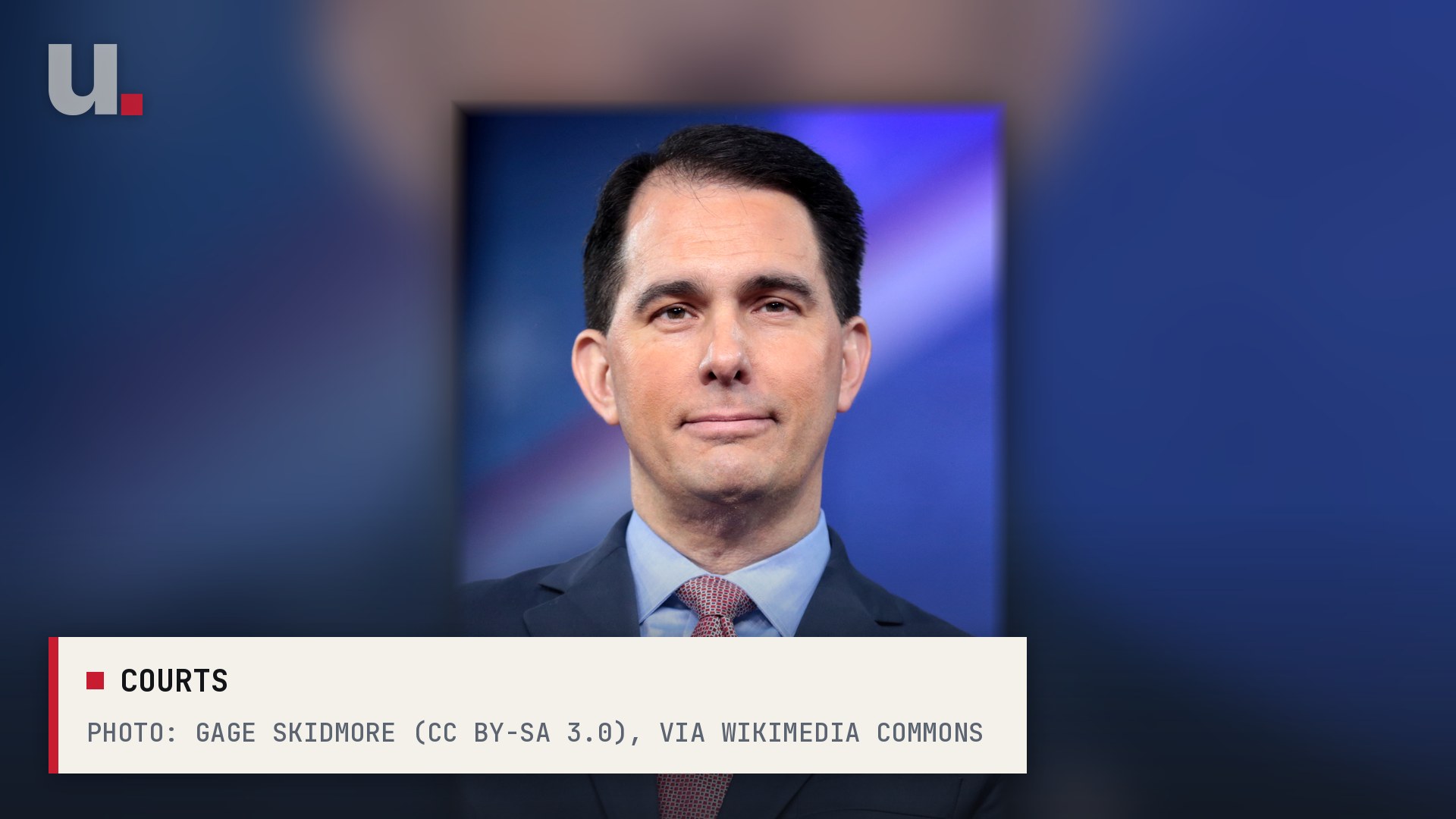
Fifteen years after Scott Walker signed the law that broke the grip of Wisconsin’s public-sector unions, the unions are getting one more shot at it, and this time the court looks friendly. On Wednesday the Wisconsin Supreme Court agreed to hear their lawsuit against Act 10. The vote was 5-1, and the order did not say why.
The timing is hard to miss. The order landed eight days after Democrats won the governor’s office and both chambers of the Legislature. Gov.-elect David Crowley has said he would support repealing the law, and incoming Assembly Speaker Greta Neubauer has vowed to push for it. So Act 10 is now under attack from two directions at once: lawmakers who want to repeal it and a court that may strike it down first.
“Getting rid of our Act 10 reforms will raise costs. That’s not affordability.” (Scott Walker on 𝕏, Nov. 11, 2026)
— @ScottWalker View on 𝕏
What Act 10 actually did
For anyone outside Wisconsin, here is the short version. Before 2011, teachers and most other government workers bargained over almost everything: health plans, pensions, work rules. Act 10 limited bargaining for most of them to base wages, capped raises at inflation unless voters approve more, and made workers pay half of their own required pension contributions.
The difference showed up fast. Public employers paid 99.2% of Wisconsin Retirement System contributions in 2010, and by 2019 that was down to 52.1%, according to the Legislative Fiscal Bureau as cited by Wisconsin Right Now. School boards got control over staffing and spending that unions used to negotiate away. Walker survived a recall election over it, and the state Supreme Court upheld the law in 2014.
A brand-new argument against an old law
This lawsuit, filed by a group of unions in November 2023, doesn’t relitigate the whole thing. It goes after how Act 10 sorted workers. Police officers and firefighters were labeled “public safety employees” and kept their bargaining rights. Everybody else became a “general employee.”
The unions say that line makes no sense, because the “general” group includes people like prison guards, conservation wardens and Capitol Police, WPR reported. They argue there is no rational reason to treat those workers differently from cops and firefighters, and that the whole law should fall as a result.
A Dane County judge, Jacob Frost, bought that argument in December 2024 and declared much of the law unconstitutional, though he put his own ruling on hold almost immediately. In July a state appeals court reversed him 2-1, finding the challenge raised questions earlier courts had already settled.
One appeals judge, Shelley Grogan, went further and called the timing of the suit “to say the least, suspect.” The case was filed three months after liberals took control of the state Supreme Court.
“Renewed attempts to attack Act 10 on already-rejected bases simply because the composition of our supreme court has changed must be rejected,” Grogan wrote. “A law’s constitutionality does not ebb and flow with a court’s composition, and the judicial branch must not be used to advance political agendas on either side of the political spectrum.”
Five liberals and one conservative
Now the case goes to a court with a 5-2 liberal majority, and one of the two conservatives is sitting it out. Justice Brian Hagedorn was Walker’s chief legal counsel when Act 10 was written and had already said he won’t hear the case. That leaves Justice Annette Ziegler, the lone dissenter Wednesday, as the only conservative vote. She is retiring and stays on the court through next July, WPR reported.
Conservatives are also pointing at who funded the majority. The teachers union’s PAC, the Wisconsin Education Association Council, gave $18,000 to Justice Janet Protasiewicz’s 2023 campaign and another $18,000 to Justice Chris Taylor in January, according to Wisconsin Right Now, which cited state campaign finance records. Two local WEAC affiliates are plaintiffs in the case. Wisconsin Right Now noted that two of the five justices in the majority have publicly opposed the law.
The court gave the unions 30 days to file their brief and the Legislature and other defenders 20 days after that to respond, Wisconsin Right Now reported.
The bill for taxpayers
Walker’s point on Wednesday was simple: undo his reforms and costs go up. The conservative Wisconsin Institute for Law & Liberty has put a number on it. It estimates a full repeal would cost taxpayers about $2 billion a year, roughly $1.5 billion of that landing on school districts and close to $500 million on cities and counties, The Center Square reported.
WILL also figures the owner of an average $300,000 home could see $624 or more a year in added property taxes if school costs are passed on, according to Wisconsin Right Now. Crowley has brushed off the group’s numbers, saying in an interview that he isn’t worried about what WILL puts out.
Democrats spent this whole campaign promising voters lower costs. Wisconsin is about to find out whether those voters meant a bigger property tax bill. If the court strikes the law down, they won’t even get a vote in the Legislature on it. Six justices, five of them liberals, would make the call.
Walker’s reforms survived mass protests, a recall, a state Supreme Court case and years of federal lawsuits. Unions now get to argue their case before a court where they can count on most of the bench. Every state that has looked to Act 10 as a model should keep an eye on Madison.
Sources
- WPR — Wisconsin Supreme Court will hear Act 10 lawsuit
- WisPolitics — Wisconsin Supreme Court to hear Act 10 challenge
- Wisconsin Right Now — Justices Who Took WEAC Cash Take Up Act 10 Challenge
- The Center Square (via North Penn Now) — Wisconsin Supreme Court says it will hear Act 10 case
- WISN — Wisconsin Supreme Court to hear Act 10 challenge as unions push to overturn labor law
- Scott Walker on 𝕏 — “That’s not affordability”