

A Biden Judge Barred DOJ From Warning Ballot Counters. On Election Morning, the 9th Circuit Voted 6–5 to Let It
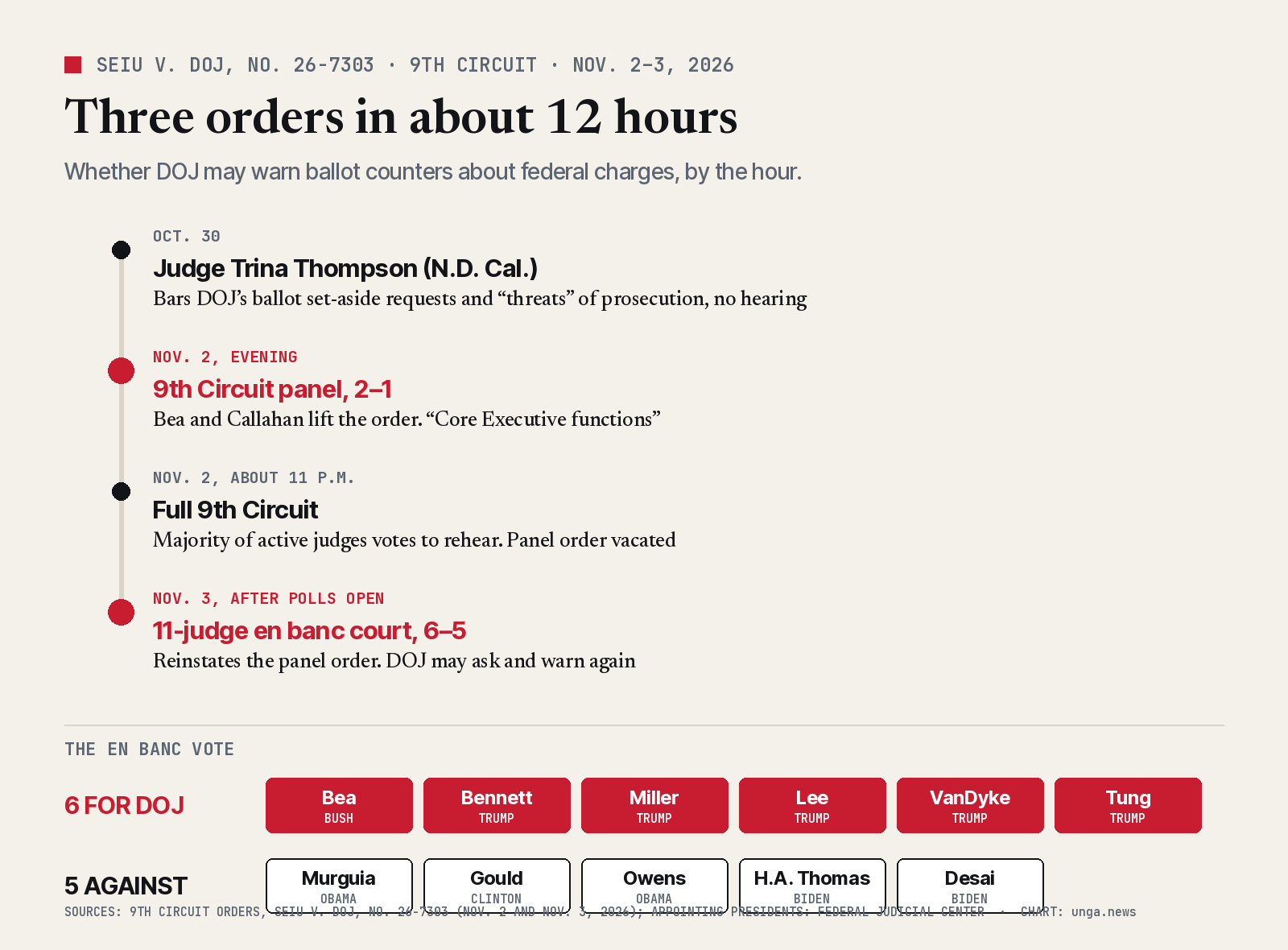
Three orders in about 12 hours. A panel freed the Justice Department Monday evening, the full court undid it before midnight, and after polls opened Tuesday six judges put it back. DOJ can again ask states to set aside suspected noncitizen ballots and warn the people who count them.
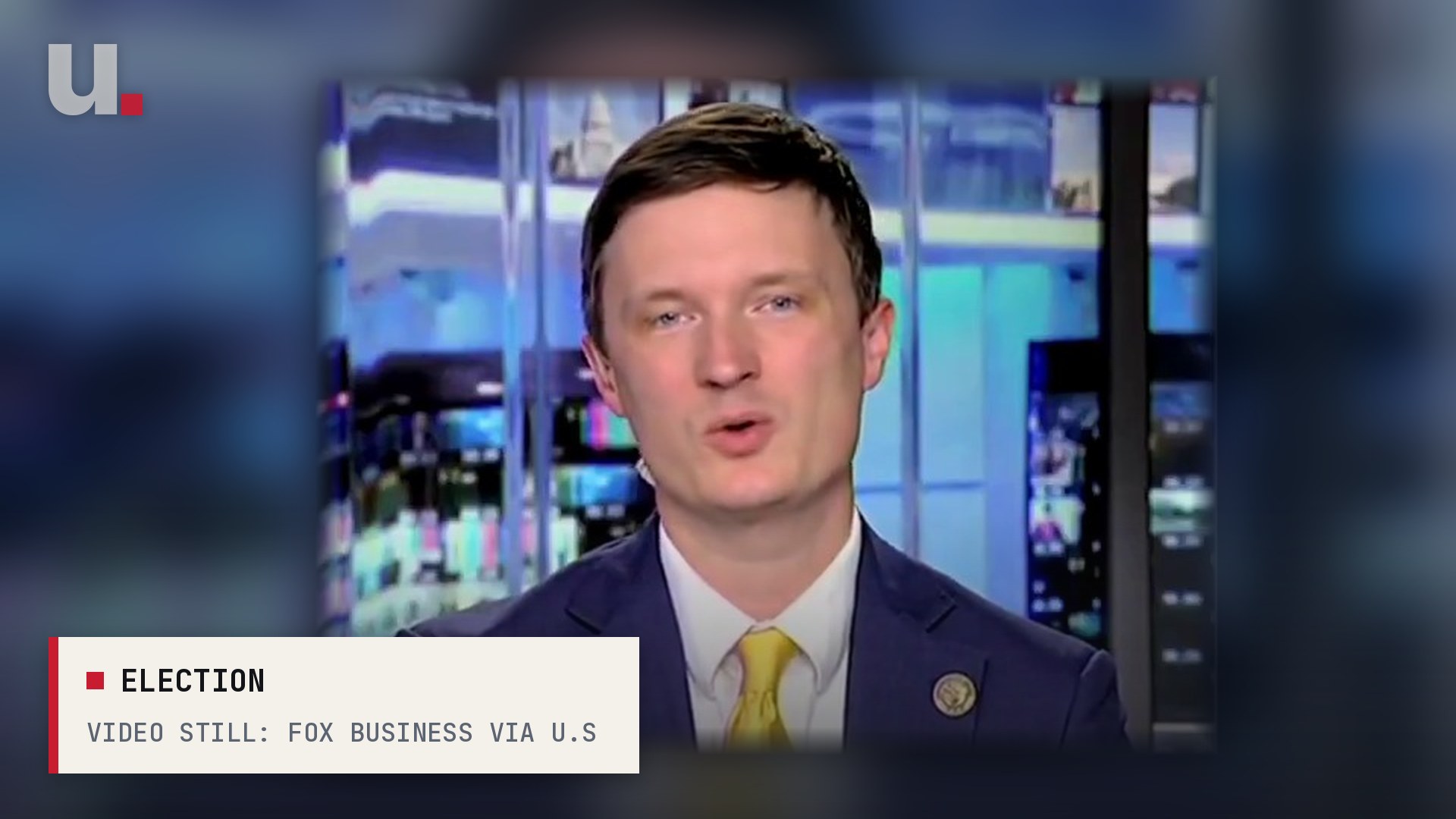
A federal judge in San Francisco had ordered the Justice Department to stop warning election workers that counting ballots from suspected noncitizens could get them charged. On Election Day morning, after the polls had opened, the full 9th Circuit lifted that order, 6–5.
It took the court three orders in about 12 hours to get there. A three-judge panel freed DOJ Monday evening. Before midnight, a majority of the court’s active judges wiped that ruling out and sent the case to an 11-judge panel. Tuesday, that panel put the first ruling right back.
So, as of today, DOJ can again ask states to set aside ballots from people it has flagged as likely noncitizens, and it can again remind the officials who count them what federal law says about helping a noncitizen vote.
What the judge had blocked
The case is SEIU v. Department of Justice. Two unions that represent election workers, SEIU and AFSCME, sued Oct. 29 along with LULAC and the NAACP. They pointed to DOJ letters sent to California and Washington asking officials to “sequester” the ballots of voters the government believes are aliens.
One Oct. 16 letter to Los Angeles County put it bluntly: “If persons knowingly tabulate ballots cast by individuals identified by federal agencies as noncitizens, they risk becoming aiders and abettors to a federal crime.”
U.S. District Judge Trina Thompson, a Biden appointee, granted an emergency order the next day without a hearing. DOJ never got to argue against it. The order ran 17 days, through Nov. 16, barred new set-aside requests and “threats” of prosecution, and made DOJ tell every state and local office that got one of its letters that the demands had been blocked. It also made the department disclose any pending search warrant applications or grand jury subpoenas tied to its noncitizen lists.
Why the 9th Circuit majority sided with DOJ
The panel order, written by Judge Carlos Bea and joined by Judge Consuelo Callahan, both Bush appointees, said Thompson was “likely wrong on both counts.”
The Voting Rights Act. The unions sued under Section 11(b), which bans intimidating or coercing people over voting. The panel said that section gives private groups no right to sue and leaves enforcement to the attorney general. Writing letters to states, warning them about federal law and opening investigations, it said, “are core Executive functions.”
The Constitution. The unions said DOJ was trampling the states’ power to run their own elections. The panel answered that California said no, the courts backed California, and California’s ballots are being counted. Nothing was taken from the state. The federal government “may request, but not compel,” it noted. Asking is not ordering.
Harm. If DOJ ever does charge an election worker, the panel said, “the prosecution itself supplies the means by which any defect, vindictiveness included, can be raised and remedied.” DOJ, on the other hand, cannot get back an election’s worth of lost warnings.
Judge Eric Miller, a Trump appointee who has ruled against the administration before, put it in two sentences in a concurrence joined by Judge Daniel Bennett. A court “does not generally have the authority to enter an injunction prohibiting the Department of Justice from expressing its views about criminal statutes, even if the court determines that those views are incorrect.”
He also turned the dissent’s main argument around. Under the Supreme Court’s Purcell rule, courts are supposed to avoid changing the rules right before an election. The majority of the court evidently decided that rule did not stop “last night’s order” vacating the panel. “If that is true, then it is difficult to see how Purcell could bar this morning’s order undoing that action.”
The dissent: ‘An impossible choice’
Chief Judge Mary Murguia, an Obama appointee, wrote for the five dissenters. Last week the same court ruled that DOJ cannot force California to set those 20,000 ballots aside. “These two decisions cannot be reconciled,” she wrote. If DOJ cannot order it directly, she argued, it cannot get there “through threat of prosecution.”
She also cited DOJ’s own Justice Manual, which tells prosecutors not to take “overt criminal investigative measures” on alleged ballot fraud until an election is over.
Judge Roopali Desai, a Biden appointee, wrote separately about the whiplash. “In the span of twelve hours in the middle of an ongoing election and on the literal eve of Election Day, our court issued three conflicting orders,” she wrote. Election workers, she said, now “face an impossible choice: fulfill their legal duties under state law and risk federal prosecution, or comply with the federal government’s demands and violate their duties under state law.”
The five dissenters were appointed by Obama, Clinton and Biden. The six in the majority were appointed by Bush and Trump.
What it does and doesn’t change
It does not make California set any ballot aside. The Supreme Court turned DOJ down on that Monday in a one-line order, and the state is counting. It does not charge anyone either. What it restores is DOJ’s ability to ask, and to warn.
There is still a catch. In Washington, D.C., Judge Tanya Chutkan separately barred DOJ and Homeland Security on Monday night from sending new lists of suspected noncitizen voters to state and county officials. So DOJ can warn counters about the names it already sent, but for now it can’t hand anyone a new list.
The appeal stays with the 11-judge panel “pending further order of the court.” Thompson’s order was set to run out Nov. 16 either way.
Sources
- U.S. Court of Appeals for the Ninth Circuit — SEIU v. DOJ, No. 26-7303, en banc order reinstating the stay, with Miller concurrence and Murguia and Desai dissents (Nov. 3, 2026)
- U.S. Court of Appeals for the Ninth Circuit — SEIU v. DOJ, No. 26-7303, panel order granting stay (Bea, J.), Murguia dissent (Nov. 2, 2026)
- U.S. Department of Justice on 𝕏 — Video: Acting Deputy Attorney General Trent McCotter on Fox Business (Nov. 2, 2026)
- The Hill — Full 9th Circuit to rehear suit over Trump administration, election worker threats (Nov. 3, 2026)
- Los Angeles Times — Feds deploy election monitors to L.A. as 9th Circuit sides with Trump in ballot dispute (Nov. 3, 2026)