

Alito Warns Plans to Remake the Supreme Court Could Change It Forever
At a dinner in his honor, the justice said critics want to damage the court’s standing and then change who sits on it, as a new Congress gets ready to take over.
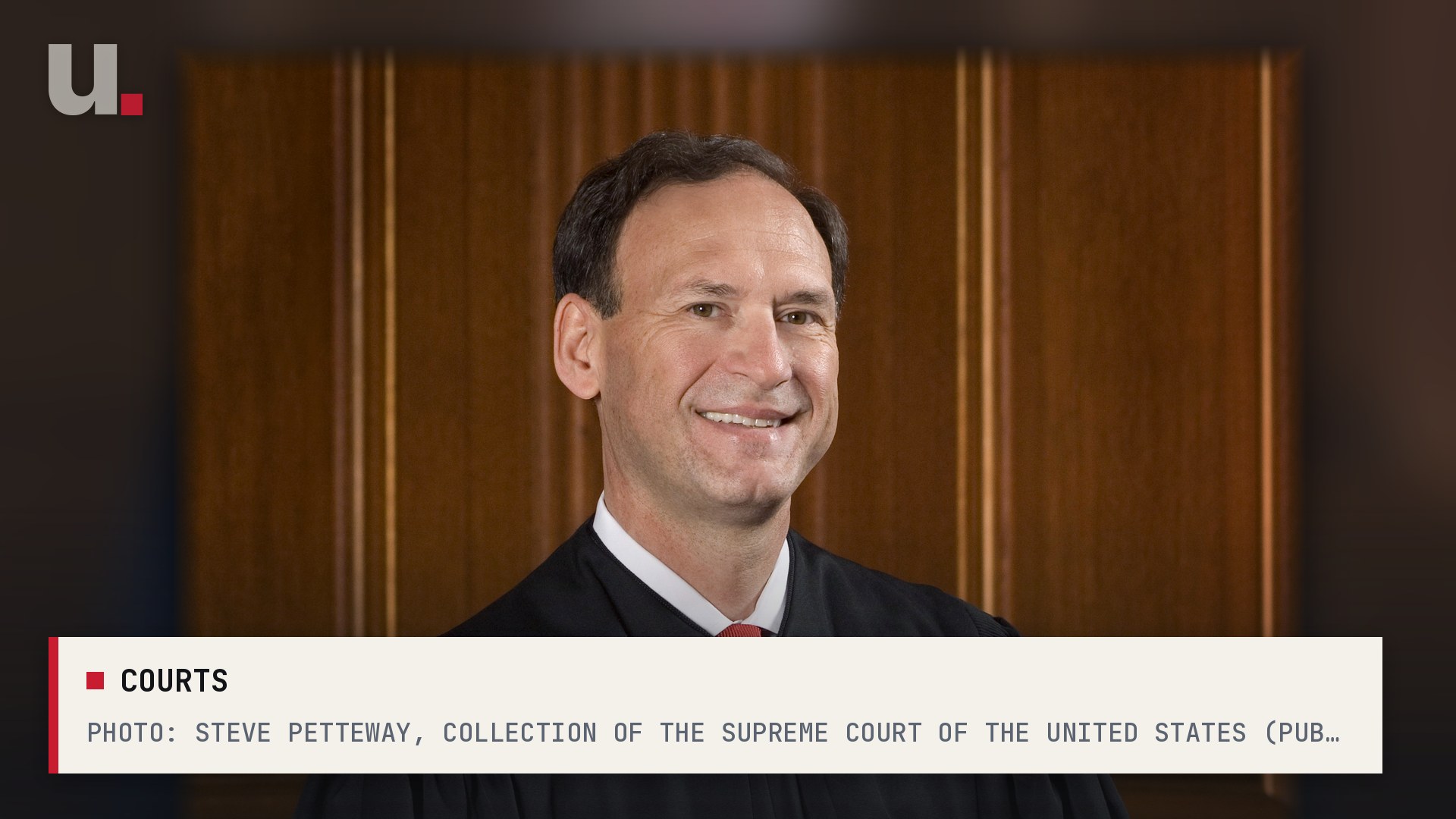
Justice Samuel Alito used a dinner in his honor Monday night to warn against plans to remake the Supreme Court, saying that changing who sits on it would threaten the court’s independence and could alter it “perhaps permanently.”
Speaking to hundreds of guests at the National Building Museum in Washington at a black-tie dinner hosted by the American Enterprise Institute, a right-leaning think tank, Alito laid out what he described as a growing campaign by the court’s critics to change how it rules, the New York Times reported.
It is his second public warning in a matter of days. Last week, Alito cautioned that Congress can’t cut the justices’ pay but can still squeeze the court’s budget, as we reported. Monday’s speech went further, taking on the idea of changing the court itself.
“Fundamentally changed”
Alito said the campaign started with efforts to intimidate and harass the justices. “Or,” he said, “if that fails, by seriously damaging the court’s standing in the eyes of the public, and then altering the court’s composition.”
“If that campaign succeeds, the Supreme Court as an institution will be fundamentally changed, and perhaps permanently,” he said.
The court, he added, could “soon face a structural question of greater magnitude: whether the court will be allowed to continue as an independent tribunal that decides cases based on its understanding of the law, not political pressure.”
Alito called the judiciary the weakest of the three branches. Its independence, he said, ultimately rests on “the sufferance of the other more powerful branches.” And he closed on the public: “What may matter most in the end is popular support for an independent judiciary.”
A new Congress is coming
Alito didn’t name any bill or mention the change in power on the way. But the timing is hard to miss. Democrats take control of Congress in January after this month’s midterm elections, and many of them have backed changing the court, from adding seats to setting term limits for justices to tougher ethics rules.
After the court’s decision last term that significantly weakened the Voting Rights Act, members of the Congressional Black Caucus said they would work to “aggressively advance Supreme Court reform,” including term limits. In a letter this month seeking support for his bid for House speaker, Rep. Hakeem Jeffries of New York said lawmakers must “clean up the mess at the Supreme Court.”
Adding seats would take only an act of Congress signed by the president. The Constitution doesn’t set the number of justices, and it has stood at nine since 1869. Term limits are trickier, because the Constitution says federal judges serve during “good behavior,” which has long been read to mean for life.
The last serious push to add seats came in 1937, when President Franklin Roosevelt, frustrated that the justices kept striking down New Deal laws, asked Congress to let him name an extra justice for every sitting justice over 70. The plan went nowhere. The Senate Judiciary Committee, controlled by Roosevelt’s own party, called it a measure that should be “so emphatically rejected that its parallel will never again be presented to the free representatives of the free people of America.”
The idea came back after 2020. President Joe Biden set up a commission in 2021 to study changes to the court, including adding seats and term limits. Its final report that December laid out the arguments on both sides but made no recommendation on expanding the court.
A court split by party
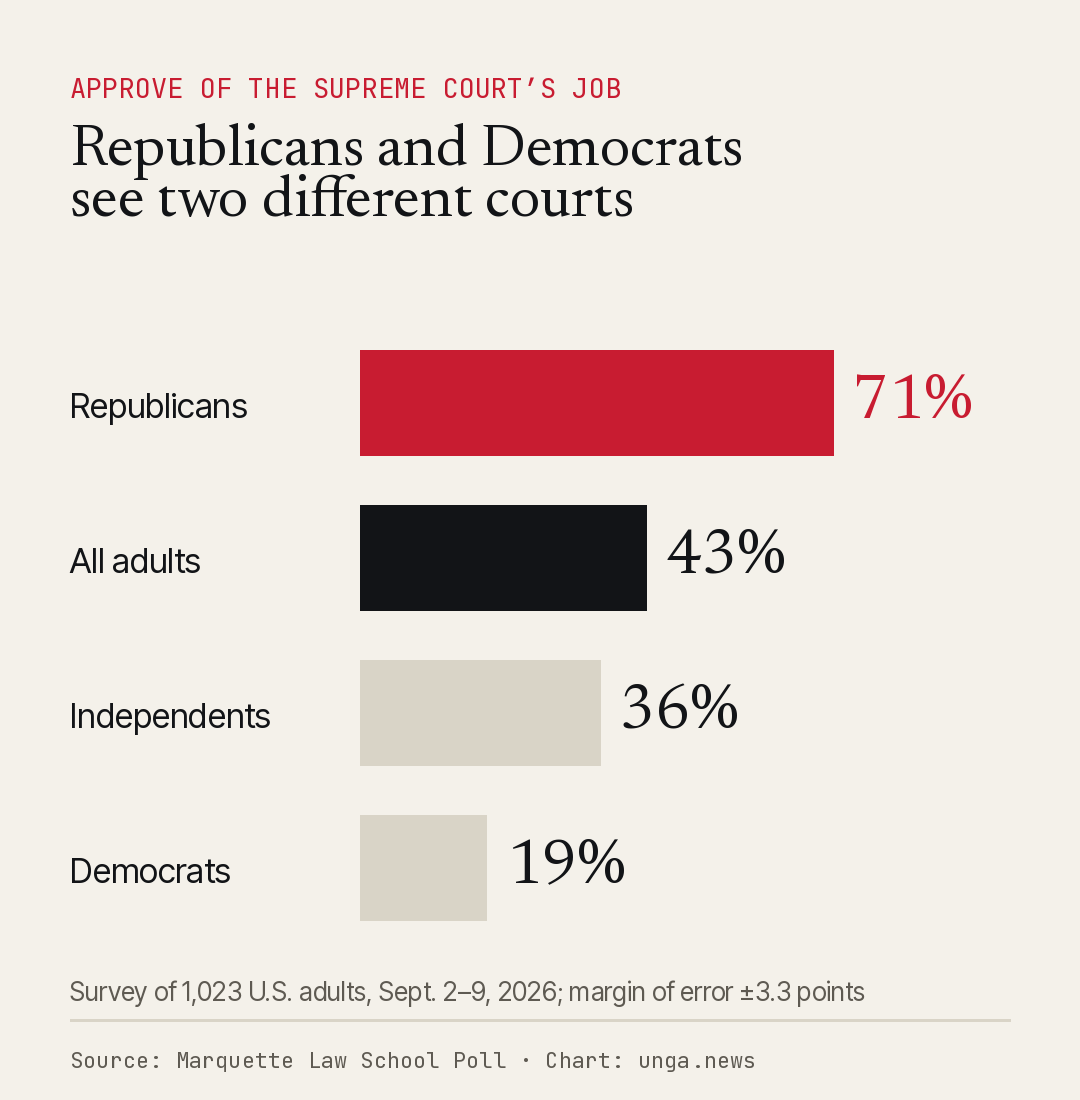
Public opinion of the court has slipped. The Marquette Law School Poll found in September that 43% of adults approved of the job the court is doing, down from 47% in July, while 57% disapproved.
The split by party is wide. Seventy-one percent of Republicans approved, compared with 36% of independents and just 19% of Democrats. The survey of 1,023 adults, taken Sept. 2–9, has a margin of error of plus or minus 3.3 points.
That gap tracks the court’s biggest rulings of recent years. Its conservative majority ended race-conscious college admissions, sent the abortion question back to the states and reined in the power of federal agencies. Alito wrote the 2022 decision overturning Roe v. Wade.
No plans to leave
After the midterms, talk grew in Washington that Alito, 76, might retire so a successor could be confirmed before the Senate changes hands in January. He has told people close to him that he has no intention of announcing his retirement and plans to stay on the bench at least through the end of the current term next summer, according to the Times.
Alito joined the court in 2006, appointed by President George W. Bush. Along with Justice Clarence Thomas, he is the justice most likely to side with the administration’s policies, and Monday’s speech made clear he plans to defend the court as it stands.
Sources
- The New York Times via The Philadelphia Inquirer — Justice Alito warns Supreme Court overhaul could threaten judicial independence
- Marquette Law School Poll — Marquette Law School Poll finds approval of United States Supreme Court declines from 47% to 43%
- unga.news — Congress Can’t Cut the Justices’ Pay. Justice Alito Warns It Can Still Turn Off the Court’s Lights.