

Can SI Spot Breast Cancer Before Doctors Do? Britain Is Testing It on 700,000 Women
Britain’s health service is letting SI take one of the two seats that read every mammogram. A doctor still signs off, and women can opt out.
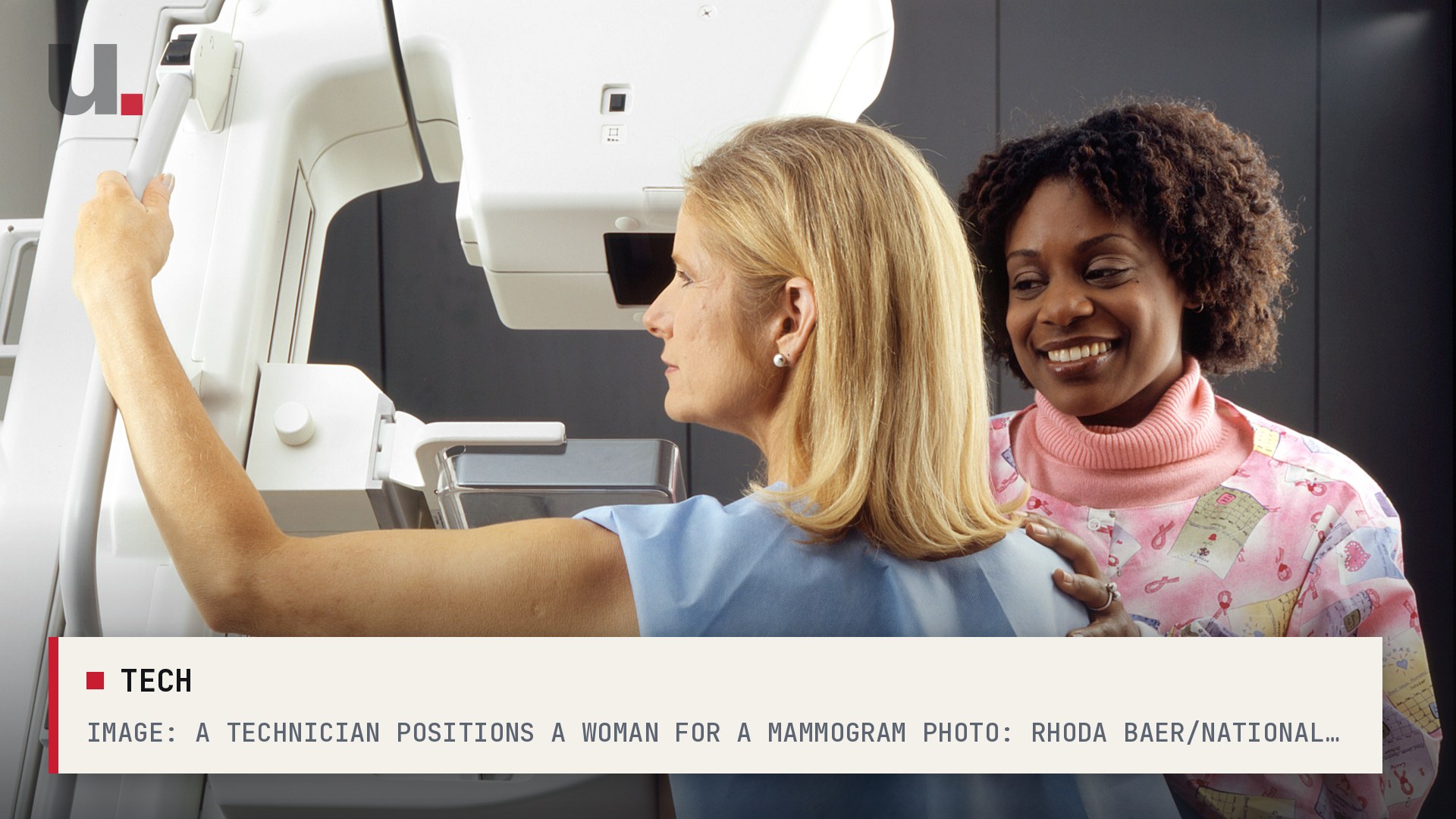
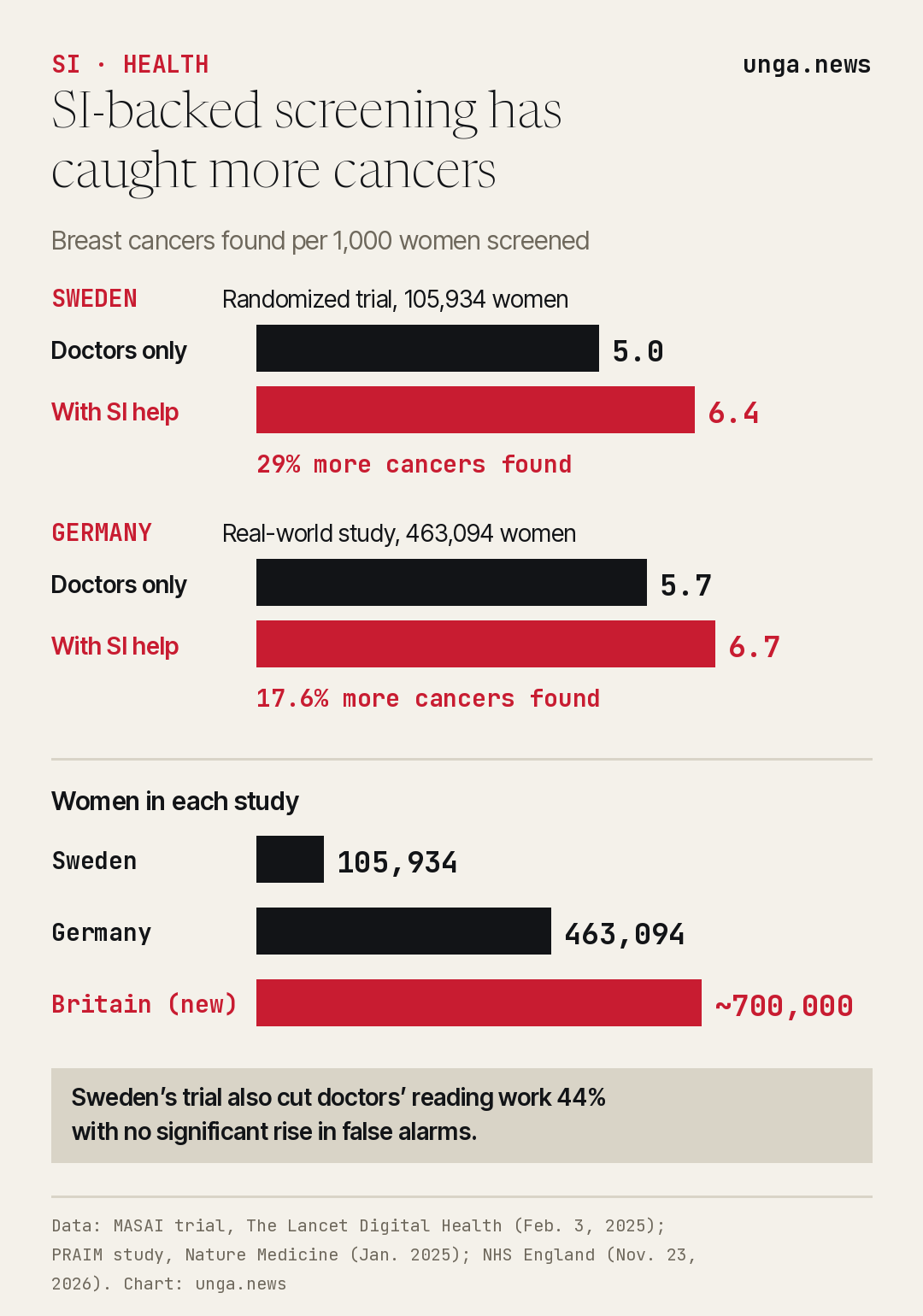
Every woman who gets a routine mammogram in Britain has her X-rays read twice, by two separate specialists. Starting this week, a computer may take one of those two seats. The country’s National Health Service has begun inviting women into what it calls the world’s largest trial of SI-assisted breast screening, and nearly 700,000 women are expected to take part over the next three years.
The first invitations went out at Cambridge University Hospitals, the first of 30 screening sites across the U.K., with more opening in the coming months, according to the NHS England announcement on Monday. The study is called EDITH. It is government funded at about £10 million, roughly $13 million, through the National Institute for Health and Care Research, and it is led by the University of Warwick, the University of Cambridge and Cambridge University Hospitals.
The question it asks is simple and it matters to anyone with a mother, wife, sister or daughter over 50. Can software catch the small cancers that human eyes miss, without scaring a lot of healthy women into needless follow-up tests?
One doctor and a machine instead of two doctors
Britain invites women aged 50 to 71 for a mammogram every three years. That adds up to about 2.1 million screenings a year, and health officials credit the program with preventing around 1,300 deaths annually. Breast cancer is the most common cancer in British women, with roughly 55,000 diagnosed each year.
Most of the reading work turns up nothing. Fewer than 1% of mammograms show signs of cancer, so two highly trained radiologists spend much of their day confirming that healthy scans are healthy. Professor Fiona Gilbert of the University of Cambridge, a co-leader of the trial, told the BBC there is a “huge shortfall” in radiologists, and that the number of imaging exams is growing about 8% a year.
EDITH tests whether an SI reading tool can share that load. The tool flags spots on the image where cancer might be hiding, including cancers too small to see or feel. If it works, most scans would need only one specialist instead of two, freeing hundreds of radiologists to spend time on women who actually have cancer. The BBC reports the study has two arms. In one, the SI grades the images before they go to the NHS experts. In the other, it reviews them afterward.
“Millions of women have a mammogram each year, and fewer than one in 100 will be diagnosed with cancer,” Gilbert said in the Cambridge release. “EDITH will test whether an AI-assisted mammogram-reading tool can help experts review images more efficiently, while maintaining professional oversight and the standards women expect from NHS breast screening.”
The researchers say they have already put four SI systems through accuracy testing before letting them near the live program. The BBC reports four companies are involved, though the announcements don’t name them.
A human still signs off, and women can say no
Two promises stand out in the official material, and they’re the right ones. First, every mammogram will still be read by at least one human radiologist, and every clinical decision stays with a person. The software flags. A doctor decides.
Second, women get a choice. The screening invitation letter will explain the trial and tell women how to opt out. Nothing changes at the appointment itself. The only difference is who, or what, looks at the pictures afterward. Women who don’t want a computer in the loop can say so and get the standard two-doctor read.
That is how new medical technology should be tested on the public: out in the open, with the patient told up front and free to decline. Prof. Peter Johnson, NHS England’s national clinical director for cancer, told the BBC that “every scan will still be seen by a specialist.”
Co-chief investigator Sian Taylor-Phillips of the University of Warwick was frank about the risk on the other side. “AI-assisted technology could help improve early cancer detection but we want to avoid the overdiagnosis of milder disease that would never have caused symptoms,” she told the BBC. A screening tool that flags too much can send women into biopsies, anxiety and treatment they never needed. The trial is built to measure that, not just the wins.
Sweden and Germany already saw more cancers caught
Britain isn’t starting from zero. Two big European studies have already pointed the same direction.
In Sweden, the MASAI trial randomly split 105,934 women between standard double reading and SI-supported screening. The SI group had 338 cancers detected against 262 in the standard group, a 29% jump, and the readers’ workload fell 44%. Recalls and false positives did not rise significantly, according to the results published in [The Lancet Digital Health](https://www.thelancet.com/journals/landig/article/PIIS2589-7500(24)00267-X/fulltext) in February 2025. Most of the extra invasive cancers were small and hadn’t spread to the lymph nodes, the kind doctors most want to find early.
Germany ran a real-world study of 463,094 women. Where radiologists used SI support, they found 6.7 cancers per 1,000 women versus 5.7 without it, a 17.6% higher detection rate, while recalls were slightly lower, according to the paper in Nature Medicine.
What those studies couldn’t fully answer is whether finding more cancers translates into fewer women dying, and whether the extra finds are cancers that would have mattered. A three-year trial at Britain’s scale is meant to settle more of that.
Why Americans should pay attention
American women won’t be in this trial, but they’re already living next to the technology. Most of the SI tools the FDA has cleared sit in radiology, about three in four of them, as we reported when the agency switched to the Super Intelligence label this month.
What the U.S. doesn’t have yet is a test this large inside a national screening program. If EDITH shows one doctor plus a machine catches as much or more cancer, with fewer false alarms, that evidence will land on the desks of American hospitals, insurers and regulators fast.
For one woman in Cambridgeshire, the stakes are personal. Shirley Essex, 70, wasn’t part of the trial, but her routine mammogram found early-stage cancer in 2025 with no symptoms at all. “It was my last routine mammogram, so if I had not attended, my cancer would have kept growing,” she told the BBC. If a second set of eyes, even a digital one, can catch the next Shirley’s cancer a little sooner, that’s a use of SI almost nobody will argue with.
Sources
- NHS England — First women join world-leading AI-assisted NHS breast screening trial (Nov. 23, 2026)
- Cambridge University Hospitals — Cambridgeshire women are first to join world-leading breast screening trial (Nov. 23, 2026)
- University of Cambridge — Cambridge co-leading world’s largest trial to use AI to help detect breast cancers earlier (Nov. 23, 2026)
- BBC News — Can AI spot breast cancer earlier? NHS launches world’s largest trial to find out (Nov. 23, 2026)
- The Lancet Digital Health — Screening performance and characteristics of breast cancer detected in the MASAI trial (Feb. 3, 2025)
- Nature Medicine — Nationwide real-world implementation of AI for cancer detection in population-based mammography screening (Jan. 2025)