

Europe’s Government Was Hacked With a Free SI Tool, and It Waited Four Weeks to Say So
Hackers armed with a publicly available SI tool knocked out the European Commission’s payroll, leave and medical claims systems. Brussels confirmed it only after a reporter broke the story.
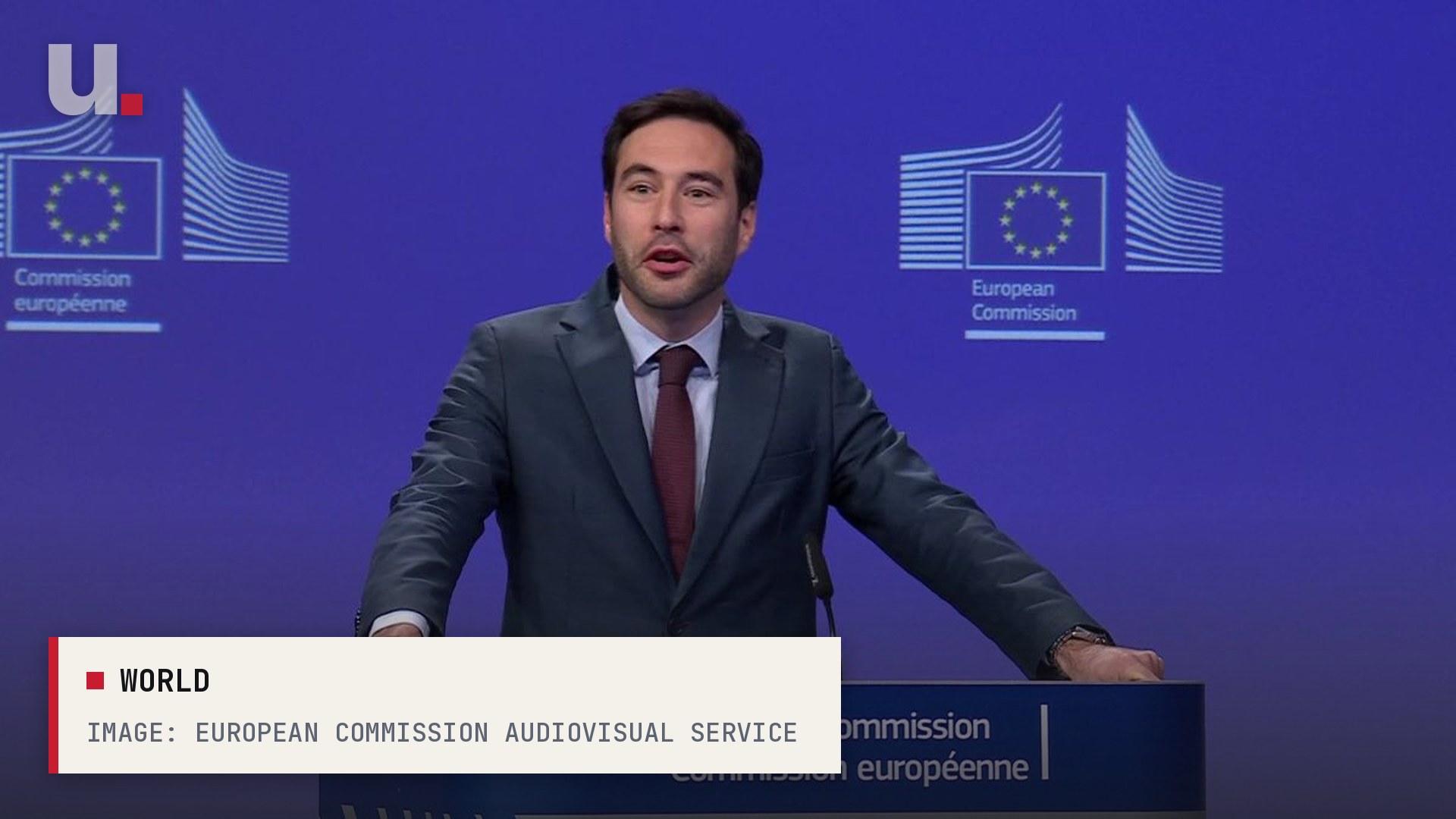
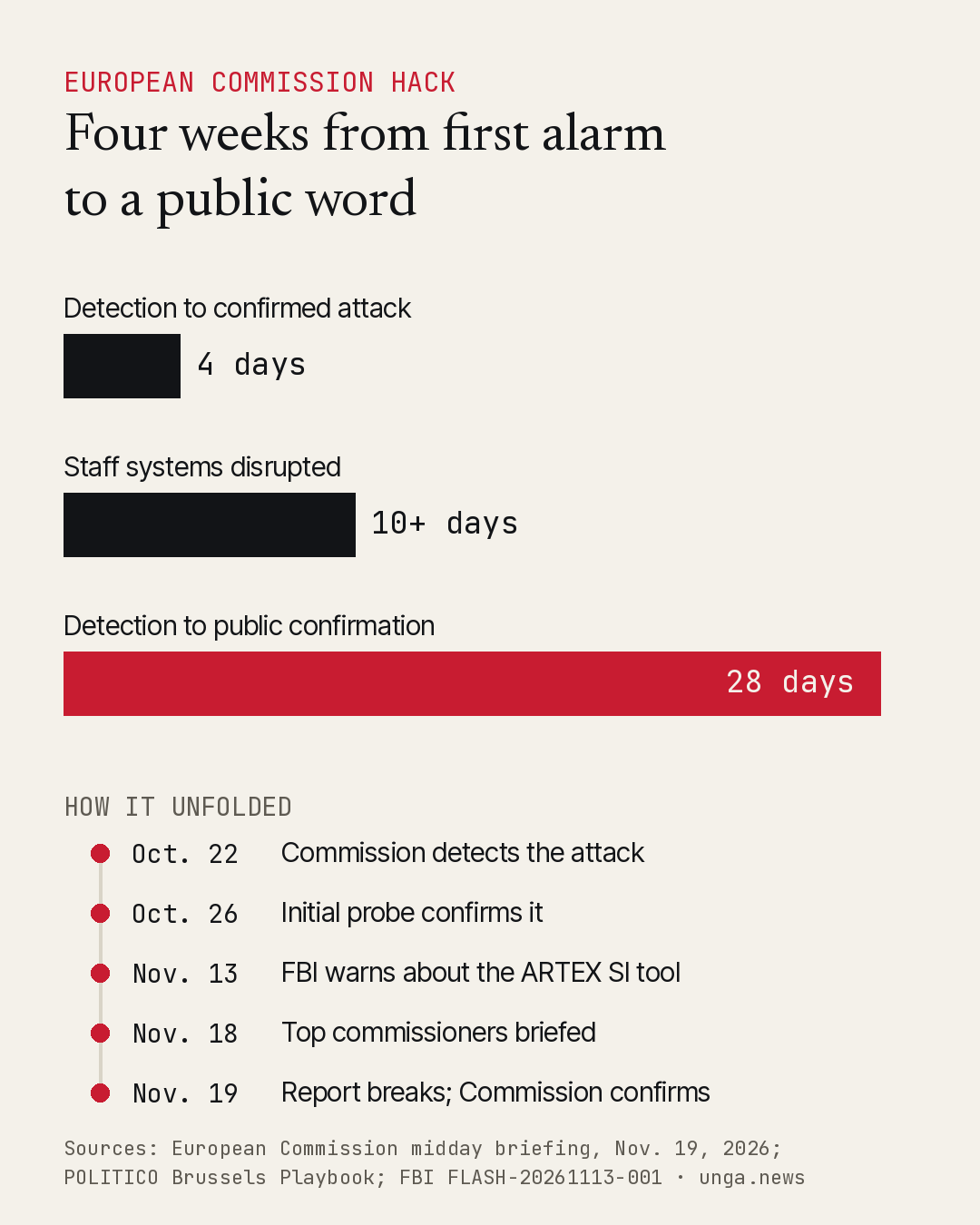
The people who wrote the world’s first sweeping law on artificial intelligence just got hacked with it. On Thursday the European Commission, the executive arm of the European Union, confirmed that attackers used a publicly available SI tool to run what its own spokesman called an “AI generated cyber campaign” against its systems. The Commission spotted the break-in on Oct. 22. It told the public on Nov. 19, the same morning a reporter broke the story.
On Monday we covered the FBI’s warning that a free SI hacking kit called ARTEX was turning amateurs into fast, dangerous intruders. That report described attacks on banks and tech vendors. Now the tool has a government scalp. The Associated Press reported it was the first time the 27-nation bloc had reported a cyberattack using an SI tool.
Payday, sick claims and vacation requests went dark
POLITICO’s Brussels Playbook broke the story Thursday morning, reporting that CERT-EU, the cyber watchdog for EU institutions, had identified ARTEX as the hackers’ weapon. The damage landed where workers feel it. Sysper, the platform Commission staff use for payslips, timesheets and leave requests, was taken offline. So was MyPMO, which handles medical reimbursements. Both came back earlier this week, then Sysper crashed again on Wednesday. Translation services went down Tuesday too.
The disruption ran more than 10 days, according to POLITICO. Salaries still landed on time, but some officials couldn’t log hours or book time off. Three officials complained about being kept in the dark. One help-desk reply POLITICO saw blamed “a general issue” with Sysper and never mentioned an attack at all.
Behind the scenes it was a bigger deal. The Commission called an urgent meeting of its Corporate Management Board, its top internal crisis body, over what a leaked internal email called “ongoing cyber incidents.” Tech commissioner Henna Virkkunen briefed the full College of Commissioners on Wednesday, two officials told POLITICO.
“The Commission believes it has contained most of the attack, but the full extent of any damage remains unclear,” an unnamed EU official told the outlet. “The systems may be coming back online. The answers are taking a little longer.”
What Brussels admitted from the podium
At the daily midday briefing, Commission spokesman Thomas Regnier took a pile of questions and answered a few. He said the attack was detected on Oct. 22 and confirmed by an initial investigation on Oct. 26. He said several applications were taken down “as a protective and preventive measure” and most have been restored, and that the Commission is working with CERT-EU and the European Data Protection Supervisor.
Asked directly whether SI was involved, he didn’t dodge. “We can confirm that this was an AI generated cyber campaign,” Regnier said in the Commission’s own briefing video. “So a misuse of an AI tool, yes.” He called it “an AI tool that is publicly available” but did not name it.
On staff data, he said investigators have “not detected any evidence of a data breach affecting Commission staff as a whole.” He said he was not aware of any ransom demand. He would not say who did it, what they wanted, how they got in, or how big the attack was. “It is a campaign, so there was a series of incidents indeed,” he said, “and that’s all I can share with you at this stage.”
“There was no hiding whatsoever”
A reporter from German broadcaster ARD asked the obvious question. Why did the press learn about this from POLITICO four weeks later instead of from the Commission? Regnier said you don’t announce your defensive moves in the middle of a fight because that would make them less effective. Affected services and the data protection watchdog were told, he said, “so there was no hiding whatsoever.”
That is a fair point about operational security. It is a weaker point for staff who were told their payroll system had “a general issue.” Regnier also told reporters the Commission rolled out an action plan on SI and cybersecurity back in July, which he offered as proof that “we are very well aware of what’s going on around us.” Awareness didn’t keep the hackers out.
A cheap tool with a long reach
ARTEX started life on GitHub in July as an open-source tool for authorized security testing. According to the FBI’s Nov. 13 alert, criminals and state-backed crews quickly turned it into an attack machine that chains SI agents together, scouts for weak spots and moves through a network with little human help. The bureau said some intrusions reached admin-level access in under three hours, and that more than 1,600 ARTEX control panels were sitting exposed on the internet by early November. The developer pulled the project on Oct. 8. Copies kept circulating anyway.
The FBI also found that attacker-run copies most often plugged into cheap Chinese models, led by DeepSeek’s Flash family, which the bureau said showed a “lack of observable guardrails when framed for penetration testing.” Whether that’s what happened in Brussels nobody has said. The Commission refused to talk attribution.
Here is the uncomfortable takeaway for every government, bank and hospital. A big bureaucracy with its own cyber watchdog, a fresh SI security plan and a seat at every tech regulation table still lost its payroll and medical claims systems for more than a week to a tool anybody can download. The defenders have to win every time. A free tool now lets a small crew knock on every door at once.
Brussels says the investigation is still open. Investigators are still checking whether any staff pay or medical data walked out the door. And it took a newsletter scoop to get the people in charge to say the words out loud.
Sources
- European Commission Audiovisual Service — EC Midday press briefing of 19/11/2026 — Cyber campaign against the European Commission: Q&A
- POLITICO Europe — Brussels Playbook: Cyberattack hits the Commission (Nov. 19, 2026)
- FBI / IC3 — Threat Overview of ARTEX Autonomous Penetration Testing Framework (FLASH-20261113-001)
- The Associated Press — A cyberattack using artificial intelligence targeted the EU in October, official says
- The Record — European Commission confirms cyberattack, says hackers used AI tool
- unga.news — The FBI Says a Free SI Hacking Kit Can Break Into a Company in Under Three Hours