

Google Search Just Got Its Biggest Brain Upgrade Yet. Outside Testers Say It Makes Things Up Less.
Google put a new SI model behind its search box for everyone on Thursday. It handles rambling questions and typos, adds tables and maps, and an independent test found it bluffs far less than rivals.
Type a long, messy question into Google tonight, typos and all, and a different brain answers it than the one that answered this morning.
Google switched on a new SI model called Gemini 4 Hydrogen on Thursday and put it straight into Search for every user, worldwide, on day one. Robby Stein, the vice president who runs Google Search product, called it “the biggest model upgrade to Search yet.” It is now the default model in AI Mode, the chatbot-style tab in Search, and Google says it is “being used for your hardest questions in AI Overviews,” the summary boxes that sit on top of regular results.
Most people never pick a model. They just type into the box. So when Google swaps the engine underneath, it reaches more people in an afternoon than most SI launches reach in a year.
Robby Stein on 𝕏, Nov. 12, 2026: “The biggest model upgrade to Search yet has landed. Gemini 4 Hydrogen is here, and brings cutting-edge intelligence to all Search users. It’s now the new default model in AI Mode & being used for your hardest questions in AI Overviews.”
— @rmstein View on 𝕏
Ask it like you talk
Google’s pitch is simple. You should be able to ask the way you think, not the way a search engine wants you to. Its Search post says Hydrogen handles questions “with multiple parts, hard-to-understand typos, or highly specific requests,” and follows instructions more closely so each part of a question gets answered.
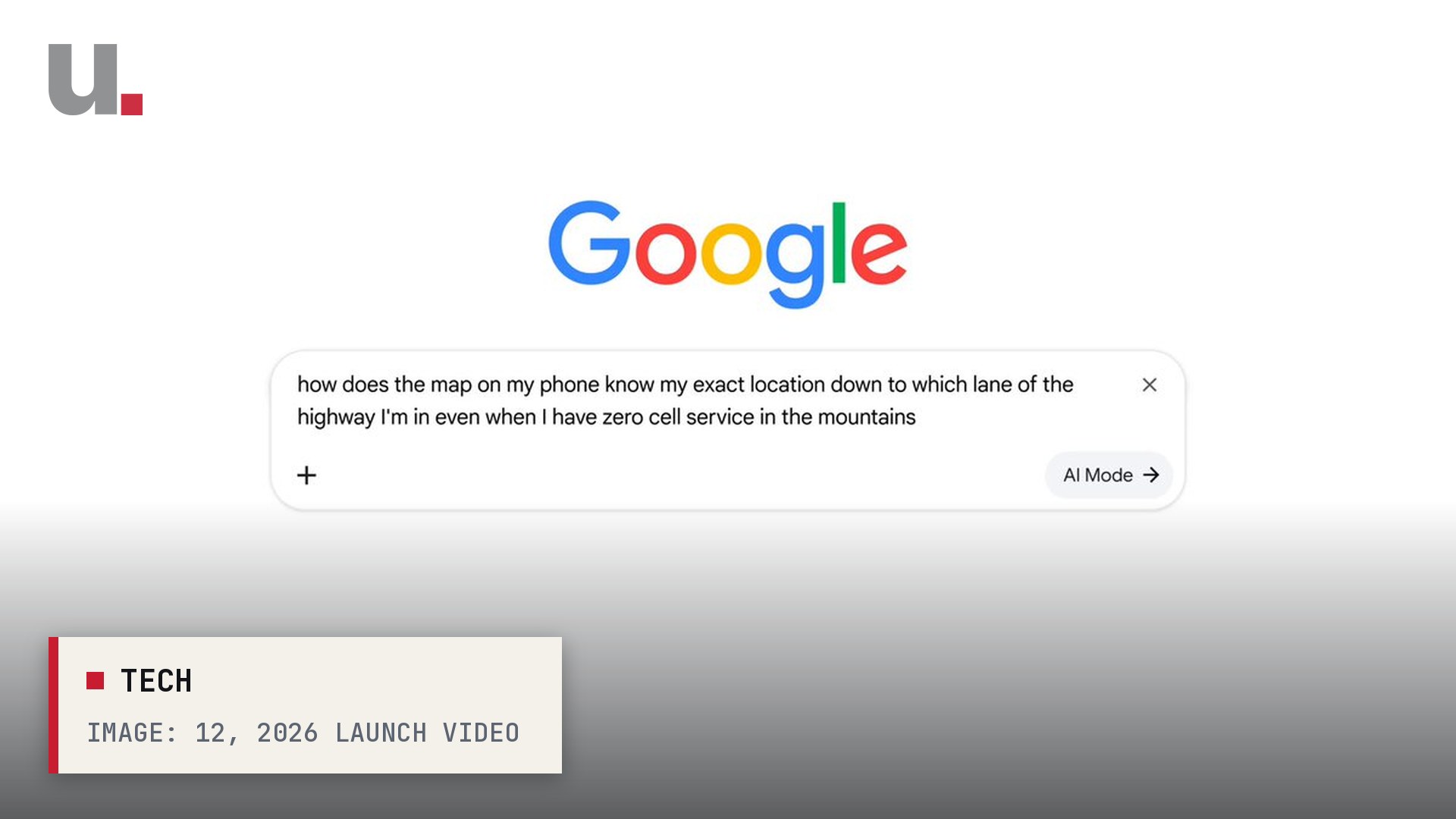
The demo Google chose makes the point. Someone types: how does the map on my phone know my exact location down to which lane of the highway I’m in even when I have zero cell service in the mountains. That is one run-on sentence, three questions deep. Search used to trip over that kind of thing. This model is built for it.
Stein’s thread showed the other changes. Ask about moving to a new city and Hydrogen builds a table of neighborhoods with star ratings and drops in a map. Ask about a statistics idea and it draws graphs. Ask what to wear with new shoes and you get outfit pictures. Google says answers will come with more images, comparison tables, charts and small custom tools built on the spot.
There is one change website owners will like. Google says Hydrogen’s better reasoning improves what it calls query fan-out, where Search quietly runs a bunch of smaller searches on each piece of your question at once. The company says that means “a broader range of helpful links than before,” including sites you might never have found. Search Engine Journal noted that neither Google’s post nor Stein’s thread gave any numbers for how many more links people will see, so that one is a promise for now.
The outside test that matters most
Every SI company says its new model is great. The useful question is whether anyone outside the building agrees.
Artificial Analysis, an independent firm that runs the same tests on every major model, published its results the moment the launch went live. Its headline finding is the one regular people should care about. On its test of whether a model admits it doesn’t know something or just makes up an answer, Hydrogen posted “one of the lowest hallucination rates recorded at 8%.” By the firm’s measurement, Claude Sonnet 5.5 came in at 43% and ChatGPT maker OpenAI’s GPT-6.1 Sol at 52%, both at their maximum settings.
That matters more in Search than anywhere else. A chatbot that bluffs is annoying. A search engine that bluffs, inside the box millions of people trust for medicine, money and directions, is a real problem. Google’s own claim lines up with the outside number: the company says Hydrogen cuts fabricated claims by more than five times compared with Gemini 3.8 Flash, the fast model it replaces.
On overall smarts, Artificial Analysis puts Hydrogen just behind the best from its rivals. At its highest setting it scored 54 on the firm’s intelligence index, one point behind Claude Sonnet 5.5 and GPT-6.1 Sol. At its normal setting it scored 51, which Google pointed out is a hair above its own bigger, slower Gemini 4 Argon at 50.
It is not best at everything. The same testers found Hydrogen weaker at long coding jobs run in a computer terminal, scoring 54% on that test against 64% for Claude Sonnet 5.5. Google, for its part, claims it more than tripled the old fast model’s score there.
Sundar Pichai on 𝕏, Nov. 12, 2026: “Following Carbon + Argon, Gemini 4 Hydrogen brings cutting-edge intelligence to everyone. Built for speed and efficiency for everyday tasks, coding and agentic workflows. Compared to 3.8 Flash, it finishes tasks 2.5x faster.”
— @sundarpichai View on 𝕏
Three models in six weeks
Google is moving fast. Artificial Analysis noted this is Google DeepMind’s third new model in six weeks. Earlier this week we covered Gemini 4 Carbon rebuilding a 1994 video game in one try. Carbon and Argon are the heavy thinkers. Hydrogen is the workhorse, and Google’s plan is for them to work as a team.
For coders, Google added a feature called Orchestrator to its Antigravity coding app that hands the hard thinking to Carbon and the grunt work to Hydrogen inside the same session. Google says that combination came close to Carbon’s success rate on a coding test while using 24% less of a user’s quota and finishing 19% faster.
Pichai’s big promise is speed. Google says Hydrogen finishes tasks two and a half times faster than the model it replaces. Artificial Analysis clocked it at about 200 tokens a second (tokens are the small chunks of text SI reads and writes) and found no model that was both smarter and quicker per task at its normal settings.
The price is part of the story too. For businesses building on it, Hydrogen costs $1.50 per million tokens going in and $7.50 per million coming out. Artificial Analysis figures that at its top setting it does a typical job for about a third of what Claude Sonnet 5.5 costs, though about two and a half times what OpenAI’s GPT-6.1 Sol costs.
In the Gemini app, paying users can pick Hydrogen from a menu, and free users get it automatically when the app decides it fits the question. It is also landing in Google Sheets for paid subscribers, where Google says it builds financial models more than 30% faster.
Google also made safety claims. It says Hydrogen is up to 81% less likely to overreach on tasks people hand it and more than twice as resistant to hidden instructions planted in web pages, a trick crooks use to hijack SI helpers. No outsider has checked those numbers yet.
For the average person, the change is already here whether you asked for it or not. Open Google, ask the long, rambling question you used to break into three searches, and see if it gets all three right. If the outside testers are right, it should also be quicker to say it doesn’t know.
Sources
- Google — Introducing Gemini 4 Hydrogen, Koray Kavukcuoglu (Nov. 12, 2026)
- Google — Google Search gets a major upgrade with Gemini 4 Hydrogen, Robby Stein (Nov. 12, 2026)
- Google DeepMind — Gemini 4 Hydrogen model card (Nov. 12, 2026)
- Robby Stein on 𝕏 — The biggest model upgrade to Search yet has landed (thread, Nov. 12, 2026)
- Sundar Pichai on 𝕏 — Gemini 4 Hydrogen brings cutting-edge intelligence to everyone (Nov. 12, 2026)
- Artificial Analysis on 𝕏 — Gemini 4 Hydrogen independent evaluation results (Nov. 12, 2026)
- TechCrunch — Google’s latest Search upgrade promises better answers to your most complicated questions, Sarah Perez (Nov. 12, 2026)
- Search Engine Journal — Google Makes Gemini 4 Hydrogen The Default Model In AI Mode (Nov. 12, 2026)
- unga.news — Google’s Smartest SI Took Apart a 1994 Video Game and Rebuilt It for the Web in One Try