

ICE Detainees Have Flooded the Courts With 97,000 Lawsuits. The Attorney General Just Called In Backup.
Todd Blanche is pulling lawyers off antitrust, civil rights and environment cases to defend deportation detentions, after challenges that once ran a few hundred a year buried federal prosecutors.
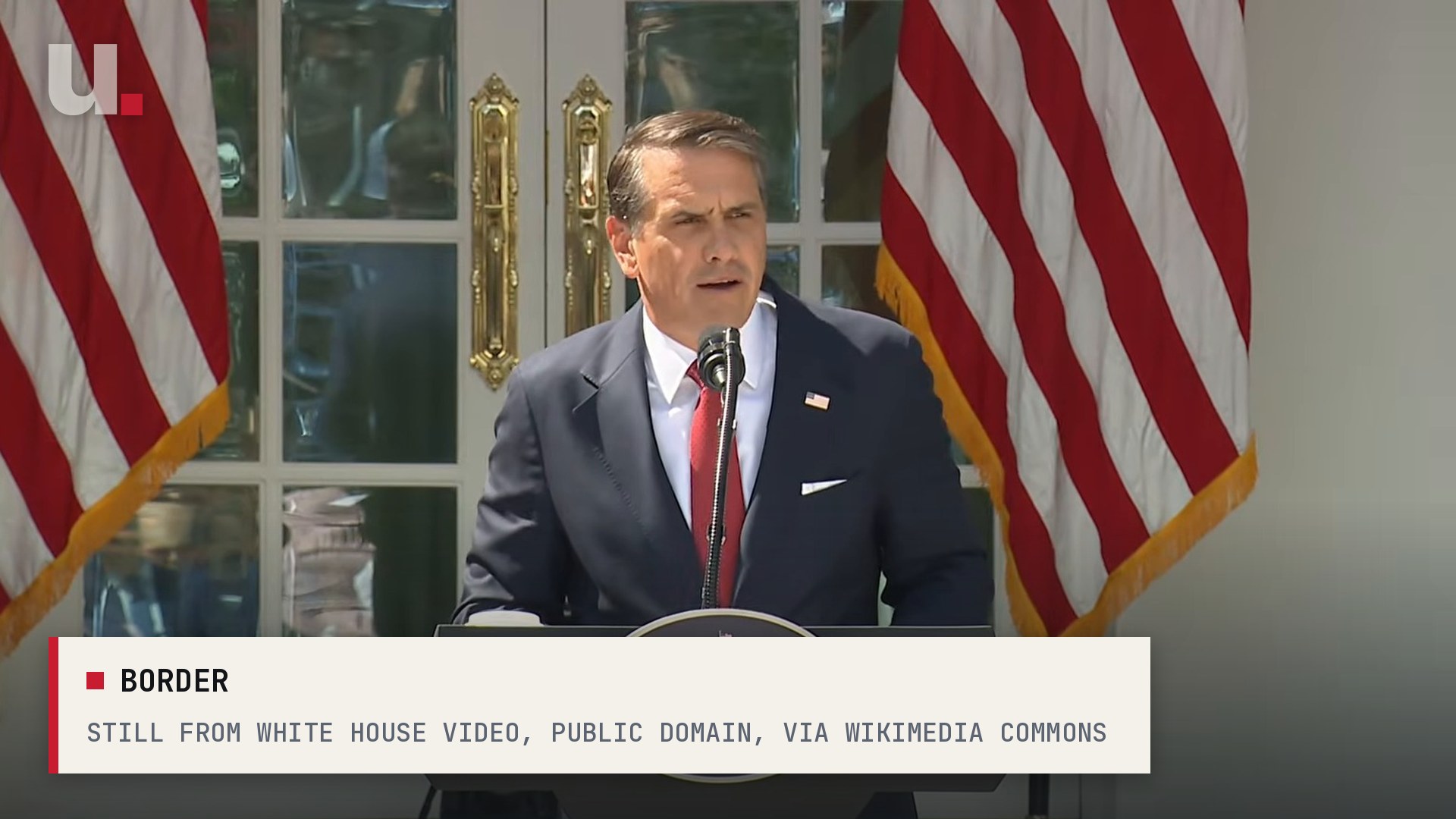
Attorney General Todd Blanche has a simple answer for the lawyers trying to tie ICE up in court: the whole Justice Department is coming.
In a three-page memo dated Tuesday and sent to every department employee, Blanche ordered lawyers from the Antitrust, Civil, Civil Rights, and Environment and Natural Resources divisions, plus the U.S. Trustees Program, to start defending immigration detention cases. His own office and the offices of the deputy and associate attorneys general will take cases too. Blanche posted all three pages on 𝕏, so you can read the order for yourself.
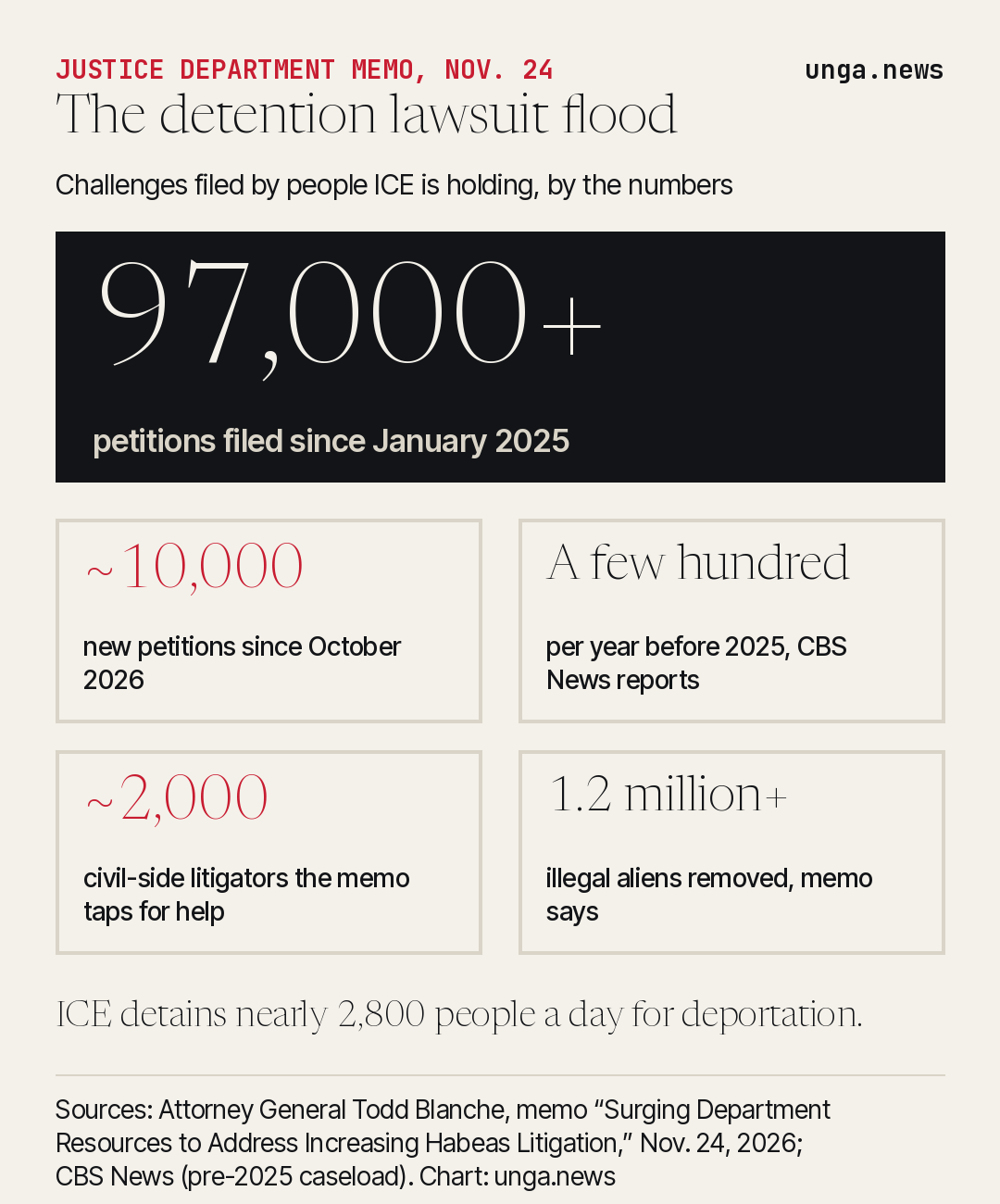
The reason is the numbers. Since January 2025, the memo says, more than 97,000 people held for deportation have filed habeas petitions, the old legal tool that asks a federal judge to decide whether someone is being locked up lawfully. About 10,000 of those came in just since October. Before Trump’s second term, these cases ran closer to a few hundred a year, CBS News reported.
That’s not a backlog. That’s a strategy.
A courtroom for every detention
Blanche says so plainly. “This increase in habeas petitions resulted, in part, from the immigration bar’s attempt to thwart President Trump’s promise to the American people to prioritize their safety and security,” he wrote. He called many of the petitions “frivolous” and said a lot of them are “jurisdictionally barred,” meaning a judge shouldn’t be hearing them at all. The catch is that every single one still needs a government lawyer to answer it. Ignore a petition and a judge can order the person released.
Until now, that job fell almost entirely on the assistant U.S. attorneys in offices across the country, the same prosecutors who are supposed to be charging cartel smugglers, gun traffickers and fraudsters. “Each new habeas petition results in a direct diversion of resources” from those offices, the memo says. “Many of the Department’s U.S. Attorneys’ Offices have been overwhelmed by the influx of petitions and impracticable procedures set by the courts.”
At least one office already waved the white flag. Earlier this month, Charles Neil Floyd, the acting U.S. attorney for the Western District of Washington, told the federal court there that his office would stop fighting detention challenges because there were simply too many, the Washington Sun reported. When the government doesn’t show up, the judge only hears one side. Blanche’s memo is built to make sure that doesn’t happen again.
In his post announcing the order, Blanche didn’t soften it either.
Attorney General Todd Blanche: The Department of Justice is surging resources to double down on fighting the onslaught of frivolous habeas petitions used by corrupt judges to release criminal aliens back into communities and avoid deportation.
— @AGToddBlanche View on 𝕏
How the reinforcements get there
The memo reads like a deployment order. Each litigating division has to name a point of contact for habeas cases in the coming weeks. The office that supports the U.S. attorneys will match lawyers with the districts drowning in the most cases, and lawyers can ask for places where they’re already licensed to practice. If travel is needed, the department pays for it. Everyone gets training on the kinds of challenges detainees have raised since January 2025, along with local contacts at each district’s civil division and at the Department of Homeland Security.
Blanche also wants to go on offense. He gave the solicitor general’s office, the Civil Division and other senior offices 30 days to send him an “aggressive appellate strategy” on habeas cases. That matters, because the fight over who gets locked up and who gets a bond hearing is headed up the ladder. Last month the full Fifth Circuit ruled 10-7 that people who entered illegally have no constitutional right to a bond hearing while ICE holds them. Other appeals courts have gone the other way, and the Supreme Court has agreed to settle it. Every win at the top would knock out thousands of these petitions at once.
He was honest about the cost, too. The department is “carrying a significant workload in light of personnel reduction,” Blanche wrote, and he promised to keep each lawyer’s habeas load to what they can “adequately and zealously defend.” Many attorneys, he added, had already volunteered.
Comey did it first
Here’s a detail critics will have a hard time with. Blanche’s first footnote cites a 2004 memo from the deputy attorney general at the time, James B. Comey, who ordered every litigating attorney in the department, along with the U.S. attorneys, to “take responsibility for roughly 2,200 briefs over the next 4 months” and to help with immigration appeals. So pulling lawyers off their normal work to handle an immigration crush isn’t new. The difference is scale. Comey was dealing with about 2,200 briefs. Blanche is staring at more than 97,000 petitions.
The memo also puts those petitions next to what the enforcement push has delivered. According to Blanche, the administration has removed more than 1.2 million people who were in the country illegally, and Homeland Security is detaining nearly 2,800 people a day for deportation. Executive Order 14159, which Trump signed on his first day back, set that in motion by ordering the government to protect Americans against what the order calls an invasion.
Put those numbers together and you can see why the lawsuits keep coming. If 2,800 people are picked up each day and the immigration bar can file a petition for every one of them, swamping the prosecutors becomes the goal in itself. Each petition buys time. Each unanswered one risks a release. Blanche is betting that the largest law firm in the world, as he calls the department, can outlast the lawyers trying to grind the system down.
“Although thousands of aliens’ attorneys are filing habeas petitions to delay their removal from our Nation, this Department stands at the ready to defend the Administration’s priorities by litigating these petitions,” the memo ends.
The antitrust lawyers who usually spend their days on corporate mergers are about to learn their way around an immigration courtroom. The reassignment runs “until the overall number of habeas petitions begins to subside,” the memo says. Going by the last two months, that could take a while.
Sources
- Attorney General Todd Blanche on 𝕏 — Memo: Surging Department Resources to Address Increasing Habeas Litigation (Nov. 24, 2026, all three pages)
- CBS News — Inundated by thousands of ICE detainee lawsuits, DOJ directs non-immigration attorneys to help with caseload
- The Washington Sun — Blanche Redirects Resources to Tackle Immigration Detention Challenges
- Federal Register — Executive Order 14159, Protecting the American People Against Invasion (Jan. 20, 2025)
- U.S. Court of Appeals for the Fifth Circuit — Sosnava Rodriguez v. Vergara, en banc opinion (Oct. 23, 2026)
- Supreme Court of the United States — Docket No. 26-104, Rhoney v. Barbosa da Cunha