

No Host, No Cameras: SI Now Makes an Entire TV Shopping Show. Every Test Hit Its Sales Goal.
A big Korean retailer just put its first all-SI sales show on the regular schedule, starting with kiwis. Suppliers spent 80% less to get on the air. The real sales numbers stay secret.
For about as long as there has been cable TV, home shopping has looked the same. A cheerful host holds up a frying pan, a camera crew zooms in, a clock counts down and the phones light up. A big Korean retailer just aired a show with none of that. No host on a set. No camera crew. Every voice and every frame on the screen was made by SI.
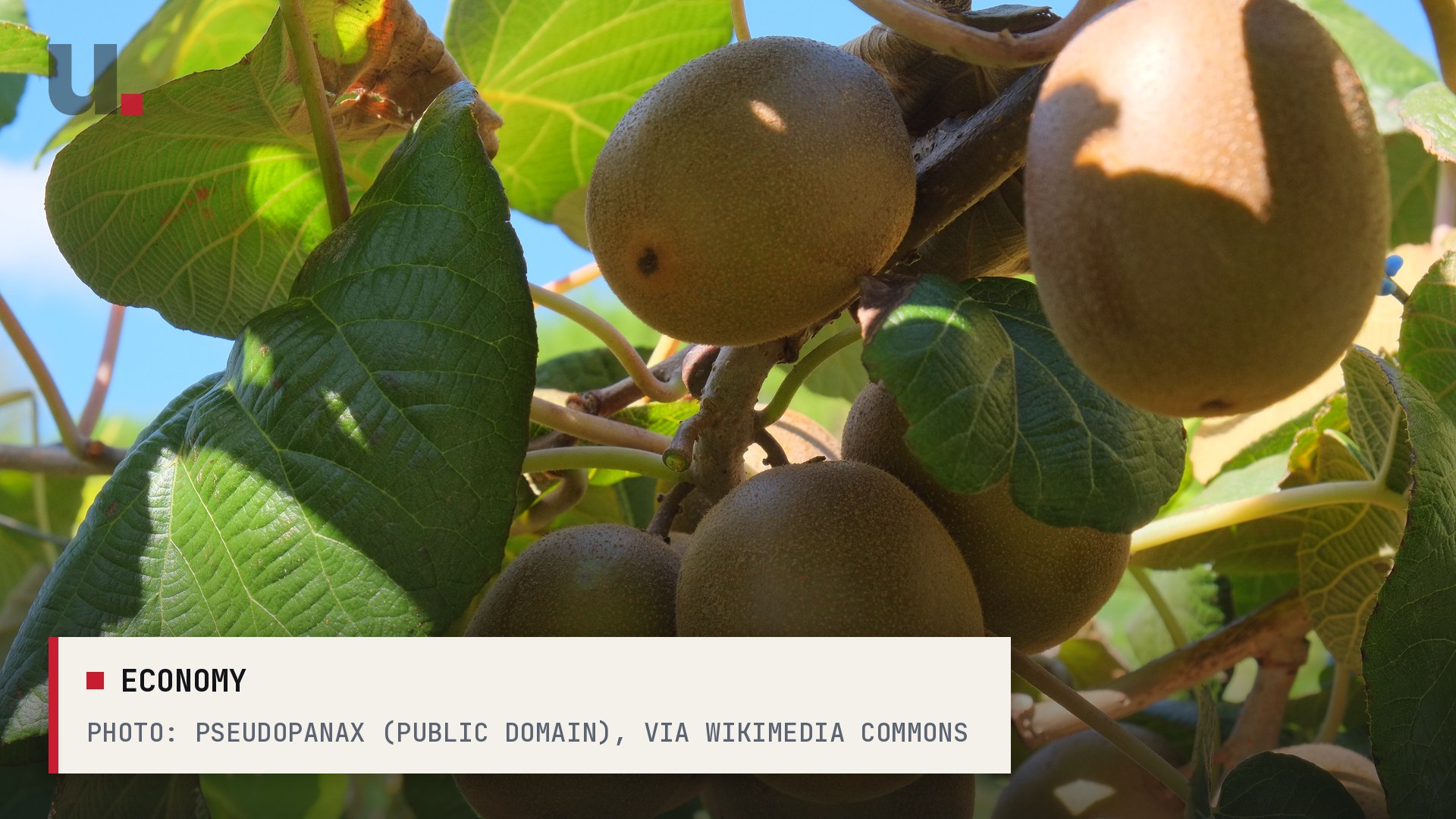
Hyundai Home Shopping, the TV shopping arm of South Korea’s Hyundai Department Store Group, said Sunday it is putting its all-SI program, called AI-REAL, on the regular schedule of its data shopping channel, Hyundai Home Shopping Plus Shop. The first regular show was booked for Monday afternoon in Seoul. It sells kiwis. Specifically, Jeju Heart Gold kiwis, from the island farms off Korea’s southern coast.
The company calls it an industry first, and the claim is narrower than it sounds but still real. Korean shopping channels have used SI before to make a single scene or to put a virtual host in front of viewers. What’s new, according to the company’s own announcement, is that the whole broadcast, from the narrator’s voice to the last shot, comes out of the machine.
Four test shows, four sales goals hit
Hyundai didn’t flip the switch on faith. It has been quietly running test broadcasts since August, and the results are the reason this is on the regular schedule now.
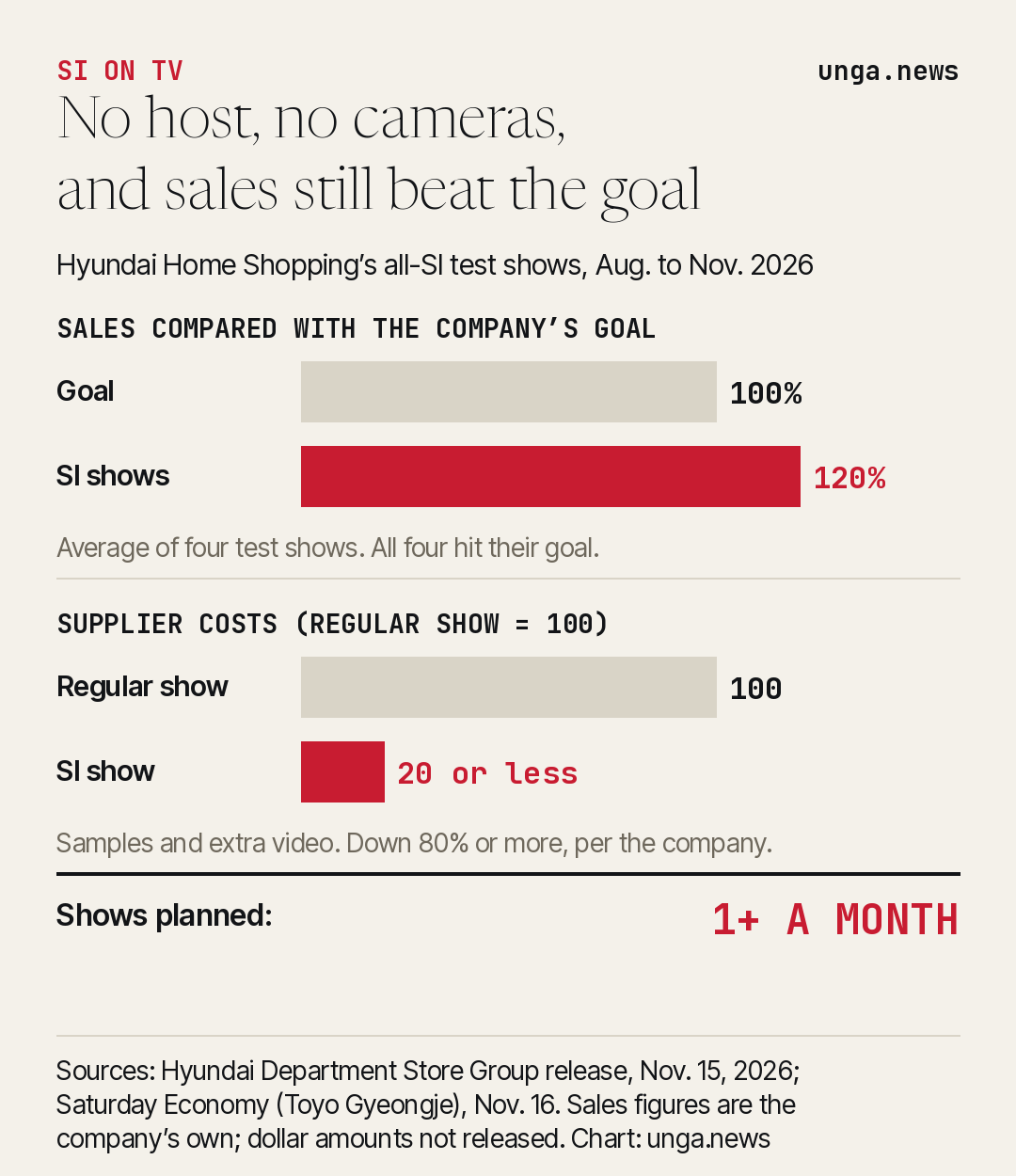
In its announcement, the company said sales on the test shows reached 120% of target. That left an obvious question: one lucky show, or a pattern? The Korean business paper Saturday Economy asked, and reported Monday that there were four test broadcasts and that every one of them hit its sales goal. “All four met their sales targets, and the average achievement rate across the four broadcasts was 120%,” a Hyundai Home Shopping official told the paper, in Korean.
The other number may matter more to the people who actually make the products. The costs that suppliers normally carry to get on the air, such as preparing product samples and shooting extra video clips, fell by more than 80% compared with a regular broadcast, the company said.
Think about who that helps. A big appliance brand can afford a studio day, a stack of demo units and a polished video package. A family farm growing kiwis on Jeju usually can’t. If an SI show can explain the product for a fifth of the cost, a small grower can get in front of a national TV audience that used to be out of reach.
Hyundai says that is the point. “We developed this AI broadcast system to grow together with small and midsize partners and to give customers a different kind of shopping experience,” said Lim Hyun-tae, who runs the company’s channel strategy division. He added that the company will keep putting SI to work across its operations.
What a camera can’t film
Part of the pitch is that the SI show can do things a studio can’t. A camera in Seoul can’t easily show you the soil a kiwi grew in or follow the fruit from the vine to the warehouse. AI-REAL can draw those scenes without a location shoot or props, the company says, so the viewer sees where the food comes from instead of just hearing about it.
The show’s producer says viewers didn’t mind the missing human. “Viewers told us the broadcast felt as natural as one with a human host, and that information such as growing conditions and cooking examples helped them decide whether to buy,” Lim Soo-jin, head of broadcast production, said in the Korea Herald’s translation.
Hyundai plans at least one SI show a month, starting with fruit, vegetables, meat and seafood. Then it wants to move into processed foods and household goods, the aisles where smaller suppliers have been asking hardest to get on the air.
The numbers Hyundai kept to itself
Before anyone declares the human host extinct, read the fine print, because Saturday Economy did. The 120% figure measures sales against a goal Hyundai set for itself. It is not a comparison with what a regular show with a human host would have sold. Hyundai also declined to release the actual sales amounts, saying they are its suppliers’ private business information.
The 80% savings comes with a catch too. It counts what suppliers spend, not what Hyundai saves on producing its own broadcasts. And four test shows is a small sample. A great kiwi in season can sell itself.
So what this proves is narrower, and it’s still a big deal. A major retailer ran a full sales show with no person on camera, and the customers kept buying. No studio day had to be booked, and the supplier’s bill for getting on TV dropped to a fraction.
The people in the studio
The obvious worry is the workers. A regular shopping show needs a host, and behind the host come producers, camera operators, stylists and stagehands. Hyundai isn’t replacing its whole lineup. It is talking about at least one SI show a month on its data channel, not a takeover of the main schedule. But a test that hits its sales goal four times out of four is how pilot projects turn into permanent ones.
We’ve seen the same pattern in this country’s job market, where the Cleveland Fed found that people in jobs SI can do are taking weeks longer to find new work, even though layoffs haven’t jumped. The pink slips don’t come all at once. The new openings just stop appearing.
For shoppers, the trade is simpler. You may get a better look at where your food came from, at a lower price for the farmer who grew it. What you won’t get is a person on the other side of the screen who has actually tasted the kiwi. Hyundai is betting most customers won’t care, and four test shows say it may be right.
Sources
- Hyundai Department Store Group — 현대홈쇼핑, 업계 최초 100% AI 방송 ‘AI-REAL’ 도입 (Hyundai Home Shopping introduces industry-first 100% AI broadcast ‘AI-REAL’), Nov. 15, 2026
- Saturday Economy (Toyo Gyeongje) — 현대홈쇼핑, AI 시험방송 4회 모두 매출 목표 달성…평균 달성률 120% (All four AI test broadcasts hit sales targets, 120% average), Nov. 16, 2026
- The Korea Herald — Hyundai Home Shopping to debut fully AI-generated sales show (Nov. 15, 2026)
- Seoul Economic Daily — No Show Hosts, No Cameras: Hyundai Home Shopping Launches Industry-First All-AI Broadcast (Nov. 15, 2026)
- The Asia Business Daily — Hyundai Home Shopping Introduces ‘100% AI Broadcast’ Without Show Hosts or Filming (Nov. 15, 2026)