

Uber’s Electric SUV Robotaxis Are Now Driving Bay Area Streets With Nobody Behind the Wheel
Nuro, Lucid and Uber pulled the safety drivers out of more than 100 robotaxis in four Silicon Valley cities. Public rides are planned for early 2027. Tesla is already running driverless in Texas.
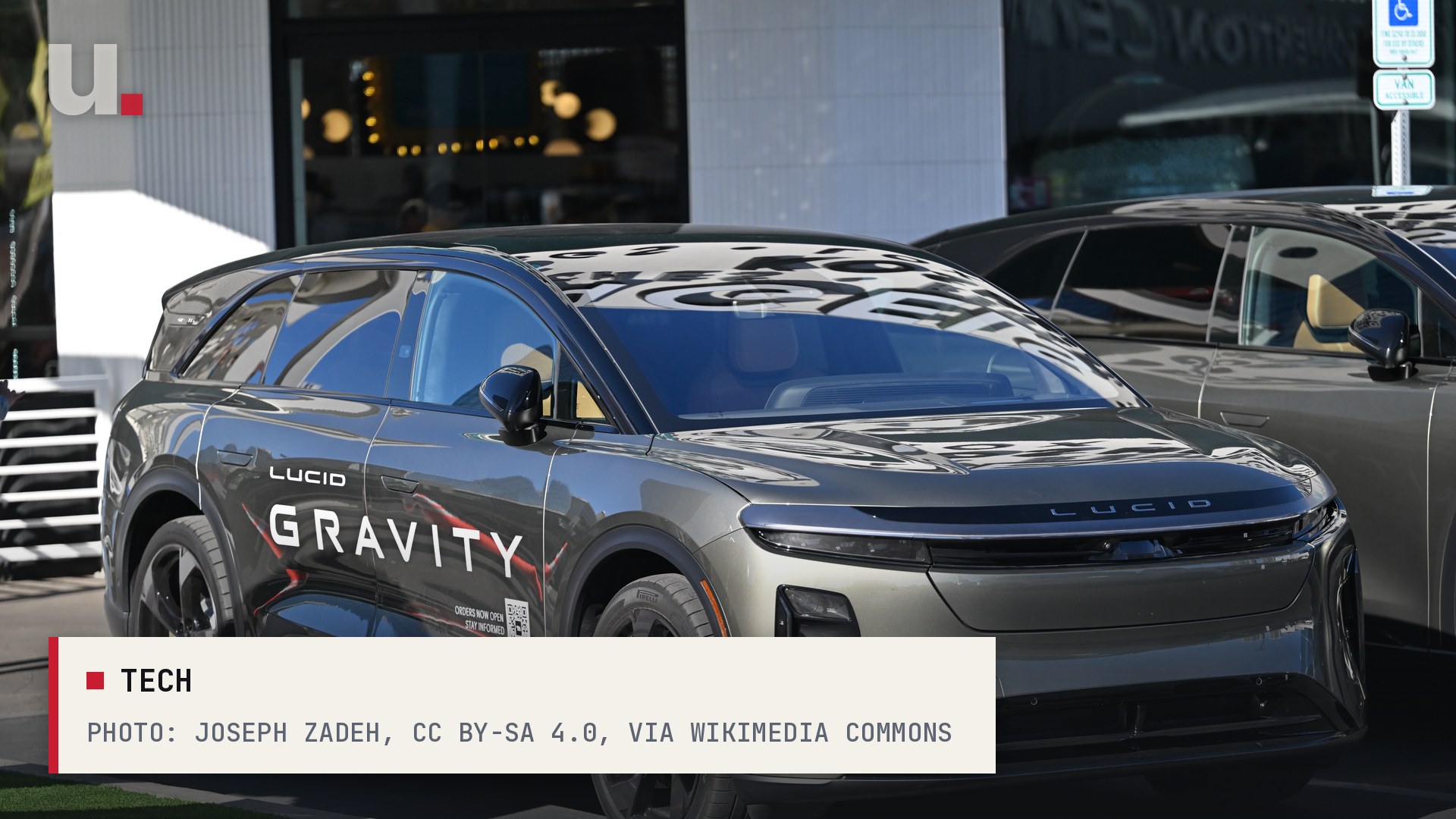
If you drive around Palo Alto this week, the big electric SUV next to you at the light may have nobody in the driver’s seat. That’s not a glitch. It’s the next step in Uber’s plan to put its own robotaxis on the road.
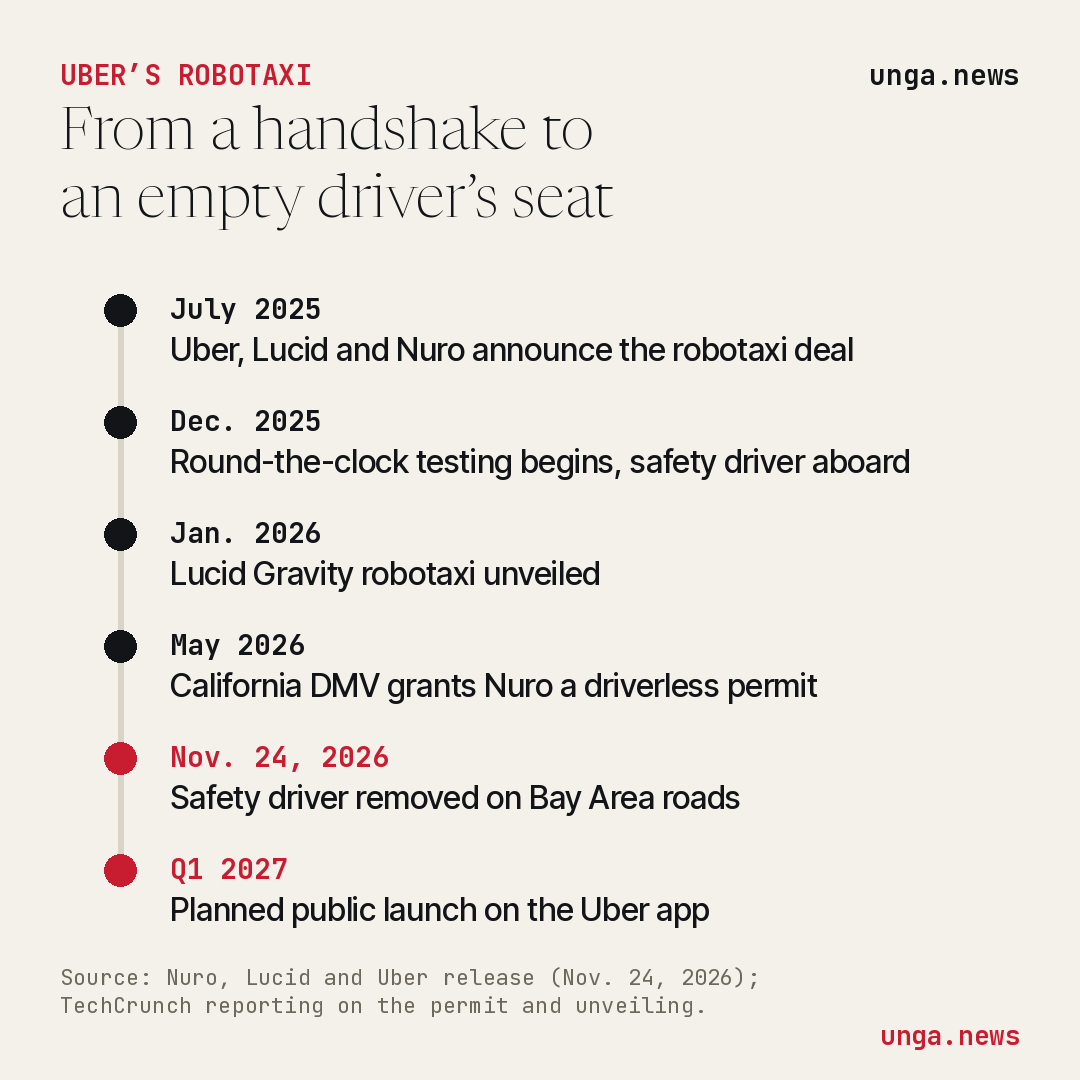
On Tuesday, Nov. 24, self-driving startup Nuro, electric carmaker Lucid and Uber announced that they have started fully driverless testing on public roads in the San Francisco Bay Area. No safety operator sits behind the wheel. The tests run in Palo Alto, Mountain View, Los Altos and Sunnyvale, and the companies say they will spread to more Bay Area cities next year.
Uber employees will soon start riding in the empty-seat cars. Regular customers come after that, with a public launch planned for the first quarter of 2027, and the rides will be booked only through the Uber app.
“Removing the safety operator from behind the wheel is an important milestone in our partnership with Nuro and Lucid,” said Samarth Kejriwal of Uber.
Nuro’s Tilo Schwarz pointed out that his company has run cars with nobody aboard before, just not ones built to carry people. “Driverless isn’t new to us, but this marks an exciting first: bringing that experience to a passenger vehicle,” he said.
A fleet of more than 100 SUVs
The car doing the work is the Lucid Gravity, a large electric SUV that Lucid turned into a robotaxi. For this stage, Lucid says it has delivered more than 100 of them with updated hardware, software and in-cabin features. Each one carries high-resolution cameras, lidar and radar, many tucked into the body and a low roof-mounted “Halo” module. The Halo has an LED display that shows the rider’s initials, so you know which car is yours.
Inside, there’s room for up to six people and their bags. Screens let riders adjust heated seats, climate and music, call support, or ask the car to pull over. A live display shows what the robotaxi sees and what it plans to do next, like yielding to a pedestrian or changing lanes. The driving brain runs on NVIDIA’s DRIVE AGX Thor computer.
How they decided it was ready
Nuro has been testing the Gravity robotaxi around the clock since December 2025, in the Bay Area and in Houston, always with a safety driver aboard. The companies say the call to pull the driver came from Nuro’s “Safety Case Framework,” a process that pulls together evidence from road testing, simulation, system performance and operating procedures and checks it against set safety goals.
Part of that work happened on a closed course at Nuro’s Las Vegas facility, where the cars ran with nobody aboard through scenarios like pedestrian encounters and other drivers running right-of-way, according to TheNextWeb. California’s Department of Motor Vehicles gave Nuro a driverless testing permit in May 2026, TechCrunch reported, so the companies waited more than six months after getting the green light before taking the driver out.
That patience is worth noting. Self-driving companies that rushed have paid for it. Being slow and boring is the right instinct when the thing being tested is a nearly three-ton SUV on suburban streets.
Big money behind it
The program dates to July 2025, when the three companies first announced it. Uber agreed to invest $300 million in Lucid, a figure TechCrunch says has since grown to $500 million, and close to $500 million in Nuro. Uber also promised to buy at least 20,000 Gravity robotaxis over six years. TheNextWeb now puts Uber’s commitment at 35,000 Lucid vehicles fitted with Nuro’s system.
That is a lifeline for Lucid, which has struggled to sell enough cars to stand on its own, and a second act for Nuro, which spent years building small delivery pods before switching to licensing its self-driving system to carmakers and ride companies. Uber and its fleet partners will own and operate the cars. Lucid is now building the first production robotaxis at its factory in Arizona.
The service was originally expected to launch in 2026, Bloomberg reported, so the early-2027 date is a slip. And the first test cities are the quiet, wealthy suburbs of the Peninsula, not San Francisco proper, where Waymo already sells rides.
Tesla is already out in front
For all the fanfare, the Uber robotaxi is still catching up to Elon Musk’s Tesla. As we reported Sunday, Tesla Robotaxi LLC had 1,507 driverless vehicles registered with the Texas Department of Motor Vehicles, more than Waymo’s 1,364 and the most of any company on the state’s list. Tesla gets there with cameras and its own software, not a roof full of lidar, and builds its cars itself instead of stitching together three companies.
Uber’s answer is to be the network everyone plugs into. It already works with several self-driving partners, and the Lucid deal is its bid for a premium ride of its own. Whether riders choose a Lucid summoned through Uber or a Tesla Robotaxi will come down to price, wait times and safety record once real customers climb in.
For now, the test fleet is just over 100 SUVs in four Silicon Valley towns. If the employee rides go smoothly this winter, the rest of us may be able to hail one by spring.
Sources
- Nuro, Lucid and Uber (Business Wire) — Nuro, Lucid, and Uber Begin Driverless Testing on Public Roads in the San Francisco Bay Area (Nov. 24, 2026)
- Nuro — Nuro-Lucid-Uber Robotaxi
- TechCrunch — Uber and Nuro begin driverless testing of Lucid robotaxis ahead of 2027 launch (Nov. 24, 2026)
- TheNextWeb — Uber, Nuro and Lucid pull the safety driver from their Bay Area robotaxis (Nov. 24, 2026)