

A Biden Judge Blocked DHS's Illegal-Voting Probes in Nine States. Seven Ninth Circuit Judges Say She Made Herself a 'Super-Executive'
The Ninth Circuit refused Friday night to rehear the case, leaving the injunction in place through Election Day. Judge Eric Tung and six colleagues dissented, saying the lower court "confused investigation for intimidation."
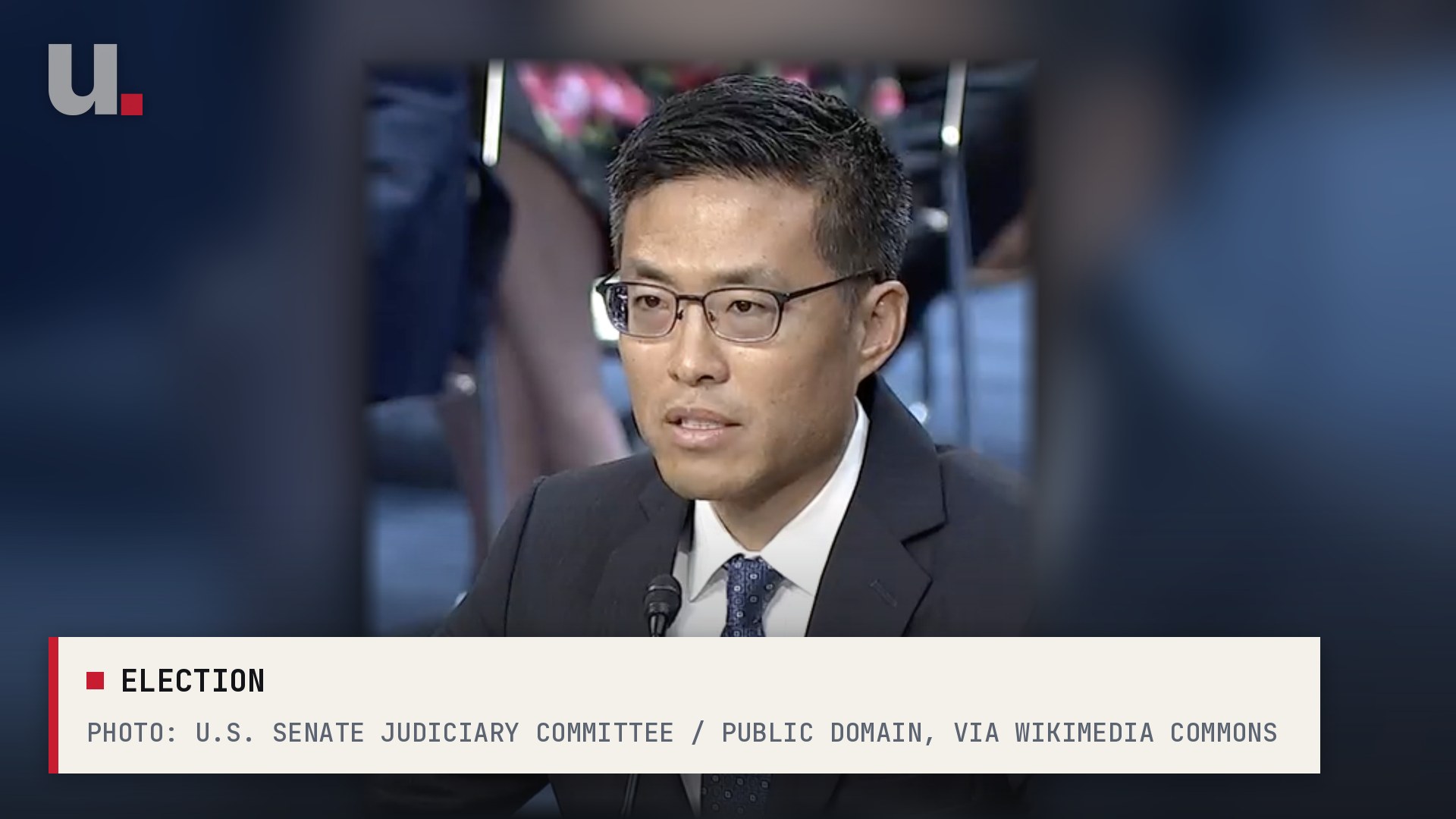
Federal agents in nine states will stay off the doorsteps of suspected illegal voters through Election Day, after the Ninth Circuit late Friday refused to reconsider a ruling that left a Biden judge's injunction in place.
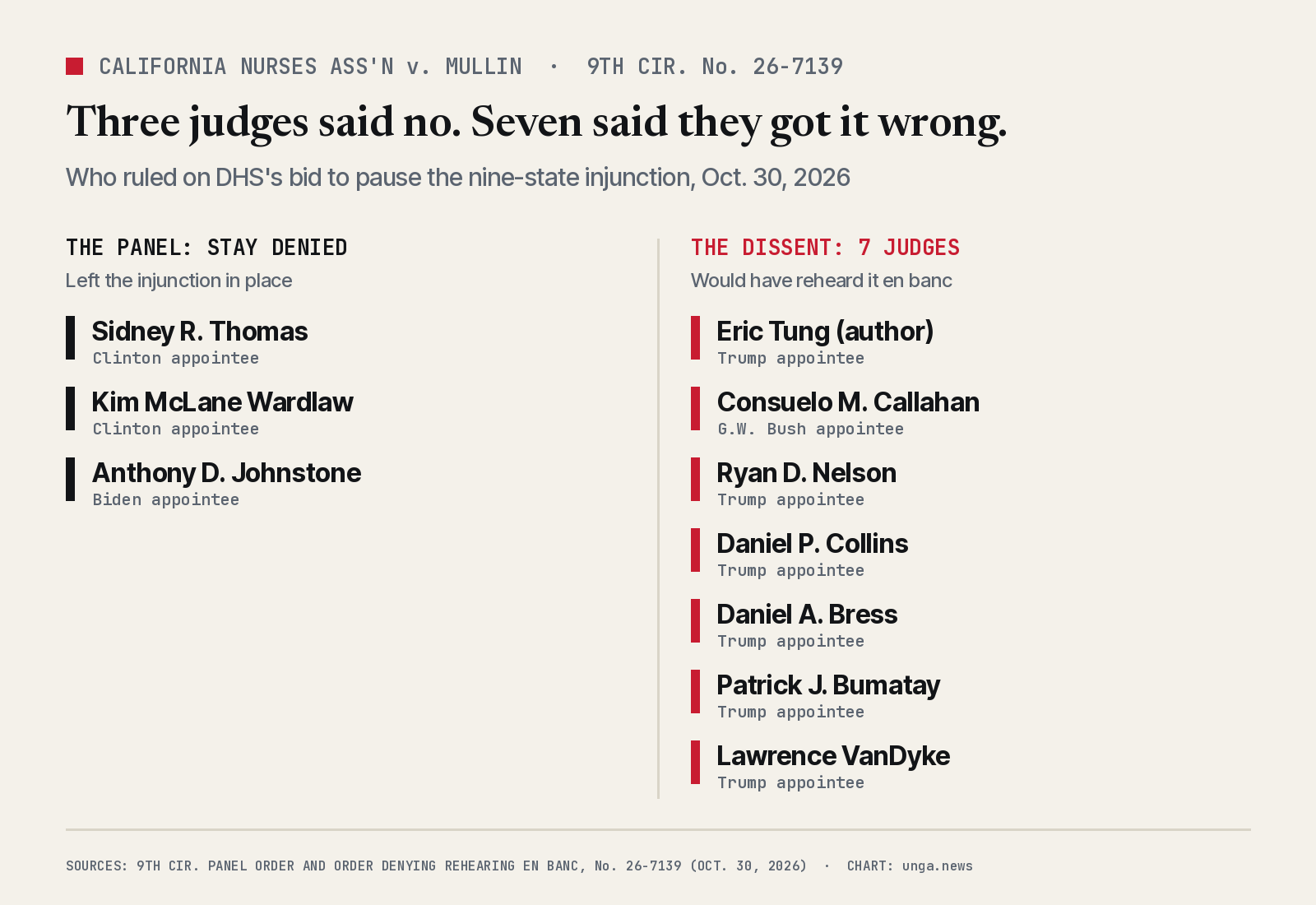
Seven of the court's judges said that was a mistake. "By enjoining the government from even investigating illegal voting, the district court departed from its limited role—and trampled on the President's in the process," Judge Eric Tung wrote in a 33-page dissent. "And by relying on section 11(b) of the Voting Rights Act ... it confused investigation for intimidation."
Judges Consuelo Callahan, Ryan Nelson, Daniel Collins, Daniel Bress, Patrick Bumatay and Lawrence VanDyke joined him.
How it got here
On Oct. 21, U.S. District Judge Araceli Martínez-Olguín, a Biden appointee in Oakland, barred the Department of Homeland Security from "elections-related field operations and field interviews" that "involve or are likely to involve" people agents "know, suspect, or should reasonably know or suspect are U.S. citizens." The order covers California, Connecticut, Georgia, Missouri, Nevada, New York, Pennsylvania, Washington and Wisconsin. It also bars field operations based only on the records U.S. Citizenship and Immigration Services builds on suspected illegal voters.
Five plaintiffs sued: the California Nurses Association, National Nurses United, the Voto Latino Foundation, San Francisco and Santa Clara County. The judge found that only the two nurses' unions had standing. Her ruling rested on four union members who said they feared being wrongly flagged, questioned and detained.
On Friday, a three-judge panel of Sidney Thomas, Kim McLane Wardlaw and Anthony Johnstone denied DHS's request to pause the order while it appeals. The panel said the government had not shown it would be irreparably harmed "for the four-and-a-half days remaining in the preliminary injunction's term." A judge then asked the full court to vote on rehearing. A majority of the active judges who took part voted no.
'The latter is evil; the former good'
Tung started with the law. Noncitizens can't vote in federal elections. One who does faces up to a year in prison, and one who falsely claims citizenship to vote faces up to five. In March 2025, President Trump ordered the executive branch to "prioritize enforcement" of those laws.
Article II, Tung wrote, gives the president "'exclusive authority and absolute discretion' to decide which crimes to investigate and prosecute, including with respect to allegations of election crime," quoting the Supreme Court's 2024 immunity ruling. "The district court here installed itself as a super-executive responsible for deciding when investigations are really in the public interest."
He said the ruling cheapened the law it relied on. Section 11(b) was written to stop real violence against black voters after Reconstruction. Tung quoted one mayoral candidate of that era who told voters that if a black man refused to leave the polls, they should "kill him; shoot him down in his tracks."
"Investigations of suspected voter fraud have nothing in common with the intimidation section 11(b) forbids," he wrote. "The latter is evil; the former good."
'So what?'
The dissent laid out four problems with the injunction:
- Standing. No union member had been targeted, and there was no evidence anyone would be. Members who stopped going to campaign events did that on their own, which Tung said doesn't count as an injury under the Supreme Court's Clapper ruling. - No right to sue. Section 11(b) gives enforcement power to the attorney general, not to private groups. - Wrong target. The statute bars a "person" from intimidating voters, and courts presume "person" doesn't include the federal government. Even if it did, the law bans intimidation "for voting," not any investigation that happens "around voting." - Too vague and too broad. Agents can't tell what they're allowed to do. "Interviewing a suspected illegal voter seems to qualify, but what about interviewing a suspected illegal voter's friends, family, or coworkers? Reviewing social media posts?" The order, he wrote, creates a "reverse reasonable-suspicion requirement" that makes lawful probes "practically impossible" without "the looming threat of contempt."
He brushed off the panel's point that the order expires Tuesday night. "So what? A time-limited injunction does not cure an injunction's vagueness or its overbreadth." He called the panel's comparison to an earlier case about journalists "fatuous."
He also noted that the panel leaned on two Ninth Circuit precedents instead of Supreme Court ones. The Supreme Court is now reviewing one of them, and in the other it granted a stay the Ninth Circuit had denied.
What happens next
The injunction runs through the close of voting on Nov. 3. The administration's appeal of the injunction itself is still pending at the Ninth Circuit, and it can ask the Supreme Court for emergency relief.
Tung's closing line: "The district court allowed abstract fear to substitute for concrete injury. It invented a right of action where Congress supplied none. It equated investigation with intimidation. ... Those errors are serious. We should have gone en banc to correct them."
The same court sent the administration home empty-handed in a separate fight on Friday, too. A different Ninth Circuit panel refused 2-1 to make California set aside about 20,000 ballots the administration says may belong to noncitizens, as we reported. Hours later, a judge in San Francisco barred DOJ from threatening election workers over those ballots.
Sources
- U.S. Court of Appeals for the Ninth Circuit — California Nurses Association v. Mullin, No. 26-7139: Order Denying Rehearing En Banc, with Dissent by Judge Tung (Oct. 30, 2026)
- U.S. Court of Appeals for the Ninth Circuit — California Nurses Association v. Mullin, No. 26-7139: Order Denying Stay Pending Appeal (Oct. 30, 2026)
- Bloomberg Law — Ninth Circuit Declines to Reconsider DHS Voter Operation En Banc