

Unions Sued Thursday. By Friday Night, a Biden Judge Had Barred Trump's DOJ From Threatening Election Workers
Judge Trina Thompson's eight-page order bars DOJ and DHS from warning election workers they could be prosecuted for counting ballots the government says belong to noncitizens. It also makes DOJ tell her about its pending grand jury subpoenas. The order runs past Election Day, to Nov. 16.
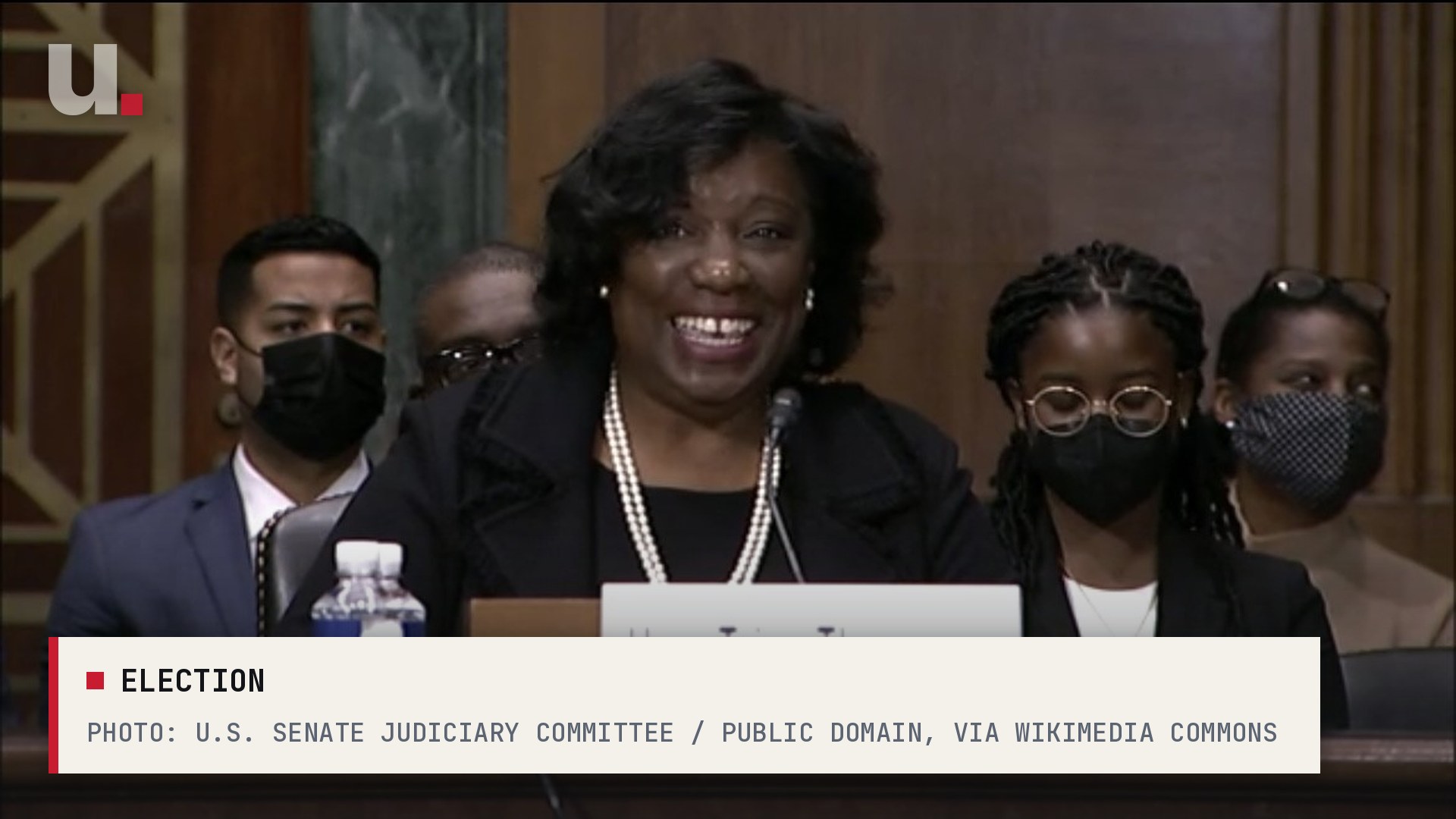
A coalition of unions and the NAACP sued the Justice Department on Thursday. By Friday night, a federal judge in San Francisco had ordered Attorney General Todd Blanche's department and Homeland Security to stop warning election workers they could be prosecuted for counting ballots the administration says belong to noncitizens.
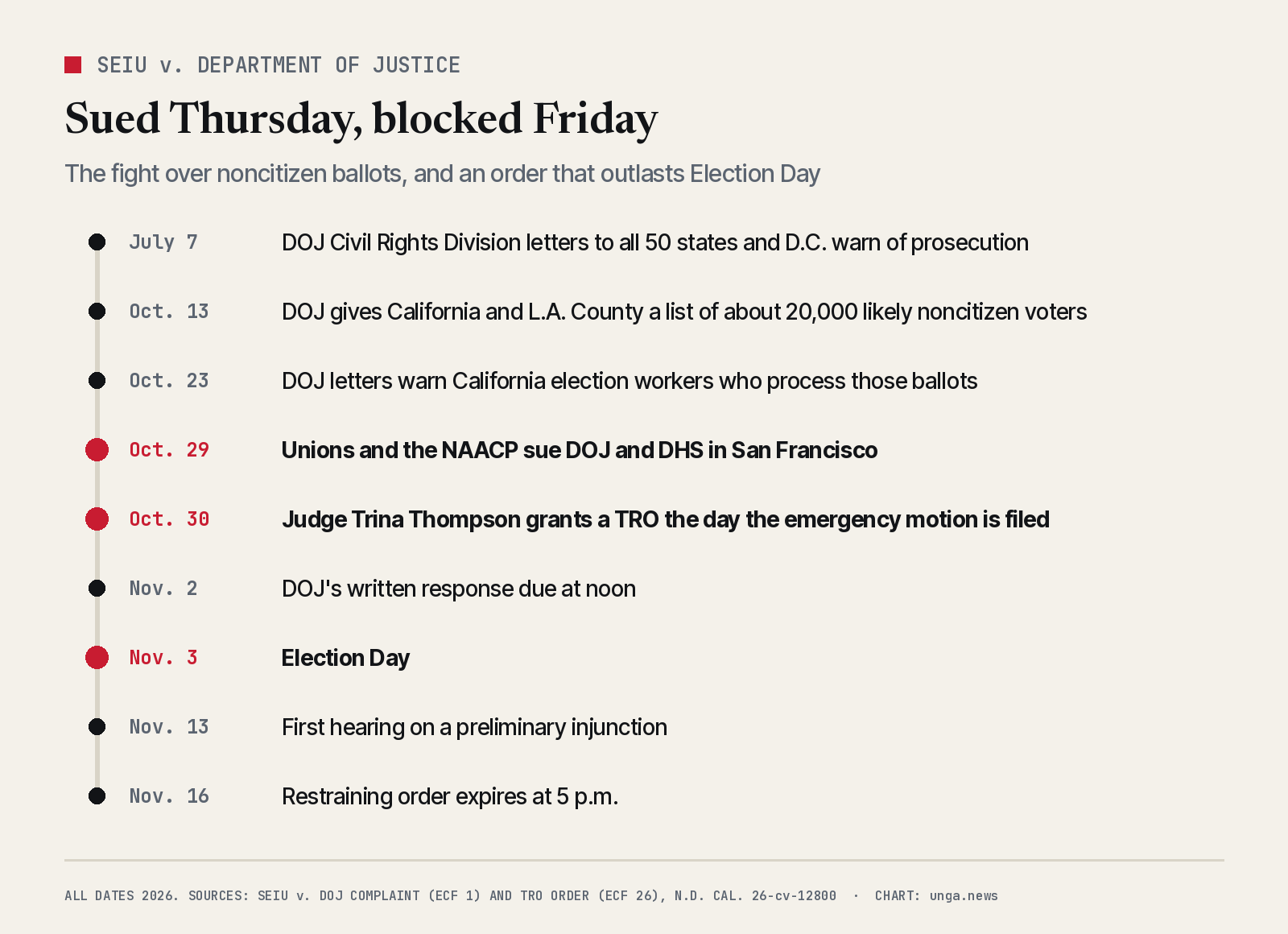
U.S. District Judge Trina Thompson, a Biden appointee, granted the temporary restraining order the same day the emergency motion hit her docket. The complaint is stamped Oct. 29. The motion and her eight-page order are both stamped Oct. 30, four days before Tuesday's midterms.
"Election Day is around the corner," Thompson wrote. "Ballots have already been issued. Americans have already begun voting. Workers have already begun processing ballots. Given the consequences of inaction, the Court sees no reason to delay its ruling."
What the order blocks
The order bars DOJ and DHS from doing four things to state and local election officials when the only reason is that the administration says a voter is ineligible:
- Threatening, intimidating or coercing them into halting the processing of that voter's ballot. - Demanding that they remove specific registered voters from the rolls, refuse them ballots, or set aside their ballots and not count them on Nov. 3. - Threatening them with prosecution for refusing those demands. - Threatening them with prosecution for counting such ballots under state and federal election law.
DOJ also has to tell every state, county or city that got one of its letters that the demands and threats in those letters are now blocked. And the department has to tell Thompson about any pending search warrant applications, grand jury subpoenas or other demands for election materials tied to its lists of suspected noncitizen voters.
That last part reaches into a live criminal probe. Federal prosecutors opened a grand jury investigation of California election officials this week, after a judge refused to make the state set aside about 20,000 flagged ballots. We covered that here. Now a judge in a separate civil case, brought by unions, wants to see what that probe is asking for.
How the judge got there
Thompson found the Trump administration likely broke Section 11(b) of the Voting Rights Act, the 1965 law's ban on intimidating, threatening or coercing anyone who helps people vote. She also said the federal government likely went beyond its power under the Constitution's Elections Clause, which leaves the mechanics of running elections to the states.
She ruled under Federal Rule 65(b), which lets a court issue a restraining order without notice to the other side, writing that the rule's requirements "are met" given how close the election is. On two other sets of claims, under the Fifth Amendment and the Administrative Procedure Act, she wrote that the court did not find it "necessary to analyze" them "at this time." Her conclusion a page later still lists the Fifth Amendment and the APA among the laws the government's actions "likely violate."
Her core finding is blunt. When election workers count ballots the way their state and federal laws require, "they do not violate federal criminal law even if a particular ballot belongs to a registered voter alleged by Defendants to be ineligible to vote."
Who brought the case
The plaintiffs are the Service Employees International Union, AFSCME, the League of United Latin American Citizens and the NAACP. Their lawyers include the San Francisco labor firm Altshuler Berzon and Norman Eisen's Democracy Defenders Fund. Eisen was special counsel to House Judiciary Democrats during Trump's first impeachment.
Their complaint traces the fight back to July 7, when DOJ's Civil Rights Division, led by Assistant Attorney General Harmeet Dhillon, sent letters to all 50 states and Washington, D.C., warning that election officers who "knowingly" keep noncitizens on their voter rolls could be prosecuted. On Oct. 13, DOJ handed California and Los Angeles County a list of about 20,000 registered voters it says are likely noncitizens and demanded those ballots be set aside. On Oct. 23, according to the complaint, DOJ letters warning of prosecution went out to county election workers across California, some delivered by armed DHS officers.
The unions first landed in front of a different judge. Judge Araceli Martínez-Olguín, who last week limited DHS door-knocking in a nurses' union case over noncitizen voters, was asked whether the two cases belonged together. On Friday she [marked the new case "not related"]({REL}), which left it with Thompson.
Another loss in a bad week for the administration in court
Friday's order capped a run of setbacks for the administration's push to keep noncitizens from voting in California. On Wednesday, U.S. District Judge David Carter refused to make the state set aside the 20,000 ballots. On Friday, a Ninth Circuit panel turned down DOJ's emergency appeal 2-1, as we reported.
The administration's argument hasn't changed. It's a federal crime for a noncitizen to vote in a federal election, and the people who process ballots are the last check before an ineligible vote counts. Thompson's order doesn't bar DOJ from prosecuting noncitizens who vote illegally. It bars the department from using threats of prosecution to pressure election workers into holding back ballots before Election Day.
What happens next
DOJ's written response is due by noon Monday, Nov. 2. Election Day is Tuesday. Thompson set the first hearing on a longer-lasting injunction for Nov. 13, 10 days after the polls close, and her restraining order runs until 5 p.m. Nov. 16. That means it covers the whole count. DOJ could try to take it to the Ninth Circuit, the same court that turned it down on the ballot fight earlier Friday. As of early Saturday, we found no public statement on the order from the Justice Department.
Sources
- U.S. District Court, N.D. Cal. — SEIU v. U.S. Department of Justice, No. 26-cv-12800-TLT: Order Granting Temporary Restraining Order (ECF 26, Oct. 30, 2026)
- U.S. District Court, N.D. Cal. — SEIU v. U.S. Department of Justice: Complaint (ECF 1, Oct. 29, 2026)
- U.S. District Court, N.D. Cal. — SEIU v. U.S. Department of Justice: Ex Parte Motion for TRO (ECF 17, Oct. 30, 2026)
- U.S. District Court, N.D. Cal. — California Nurses Association v. Mullin: Related Case Order (Oct. 30, 2026)
- CBS News — Judge orders DOJ to stop trying to "intimidate" and "threaten" California election officials
- Fox News — Federal judge blocks Trump DOJ threats against election workers ahead of 2026 midterms